Trump’s 48-Hour Ultimatum to Iran Over Strait of Hormuz Raises Global Tensions

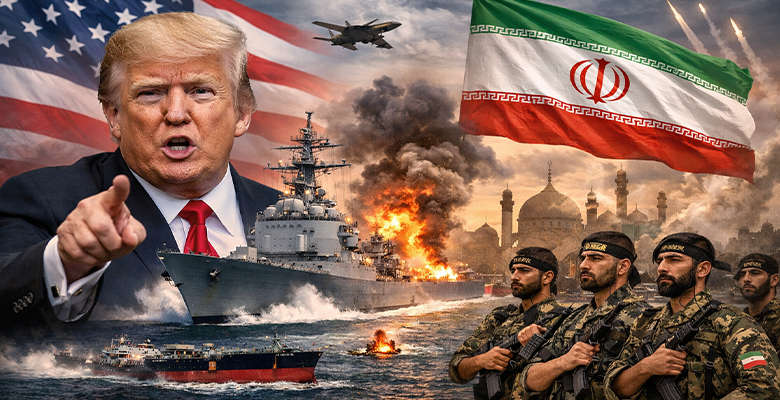
Global tensions surged sharply after former US President Donald Trump issued a stark 48-hour ultimatum to Iran, warning of severe consequences if Tehran does not reopen the strategically critical Strait of Hormuz or agree to a deal.
Trump said the deadline, which was originally extended to 10 days at Iran’s request in late March, is now nearing its end. In a strongly worded message, he indicated that “time is running out,” signaling that military escalation could follow if demands are not met.
The Strait of Hormuz, a narrow passage connecting the Persian Gulf to global shipping routes, is one of the world’s most vital oil transit corridors. Its partial closure in recent days—reportedly allowing only limited or Iran-approved vessels—has already disrupted energy markets and pushed oil prices higher, raising concerns for economies worldwide, including India.
Iran, however, has rejected recent US proposals aimed at de-escalation, calling them “one-sided and unfair.” Officials in Tehran have maintained that their actions are a response to ongoing military pressure and strikes on their infrastructure.
Meanwhile, the broader conflict continues to intensify across multiple fronts in the Middle East. Explosions were reported in and around Damascus, while cross-border attacks involving Iran-backed groups and Israeli forces have expanded. The militant group Hezbollah claimed responsibility for a series of rocket and drone strikes targeting Israeli military positions, though there has been no immediate confirmation from Israel.
Iran has also claimed to have shot down US aircraft in recent engagements, further complicating the situation. Reports indicate casualties among US troops, with hundreds injured and several fatalities confirmed, according to defence sources.
In the Gulf region, countries such as Bahrain have reported civilian injuries following the interception of drones, highlighting the growing spillover risks beyond direct conflict zones. At the same time, diplomatic efforts appear to be faltering. A proposed resolution at the United Nations Security Council aimed at safeguarding shipping routes has been delayed amid disagreements among major powers.
Also read | Petrol And Gas Shortage In India? Here’s The Real Situation Amid Iran–Israel Tensions
Global leaders are now scrambling to prevent further escalation. Mark Rutte is expected to visit Washington soon for high-level discussions, while Turkey has offered to mediate between the opposing sides. However, divisions among international stakeholders continue to hinder coordinated action.
The situation has also taken a humanitarian and strategic turn with reports of a missing US pilot after a fighter jet was downed. Efforts are underway to locate the individual, adding urgency and sensitivity to an already volatile conflict.
As the deadline set by Trump approaches, uncertainty looms over what comes next. A military response could significantly widen the conflict, disrupt global oil supplies further, and deepen instability across the region.
For now, the world watches closely as diplomacy struggles to keep pace with rapidly escalating developments, with the next 48 hours likely to prove critical in shaping the course of the crisis.