Drone Strike Near Abu Dhabi Nuclear Plant Raises Fresh Concerns Over Gulf Security and Global Oil Routes

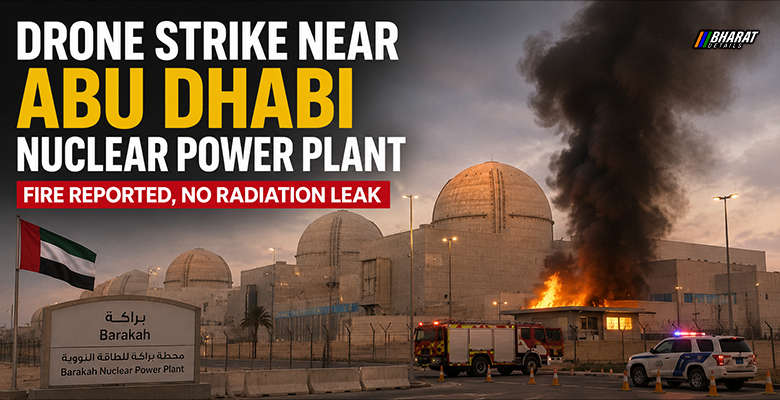
The Drone strike Abu Dhabi nuclear plant incident has once again pushed the Middle East into global focus after a fire broke out near the UAE’s Barakah Nuclear Power Plant on Sunday. Authorities in the United Arab Emirates confirmed that the blaze was triggered by a drone strike targeting an external electrical generator located outside the plant’s operational perimeter in the Al Dhafra region.
Officials quickly moved to calm fears surrounding nuclear safety, stating that there were no injuries and no impact on radiation levels or reactor operations. The UAE’s Federal Authority for Nuclear Regulation also confirmed that all systems at the plant continued functioning normally despite the attack.
The incident, however, has intensified concerns about the vulnerability of strategic infrastructure in the Gulf region at a time when geopolitical tensions remain dangerously high.
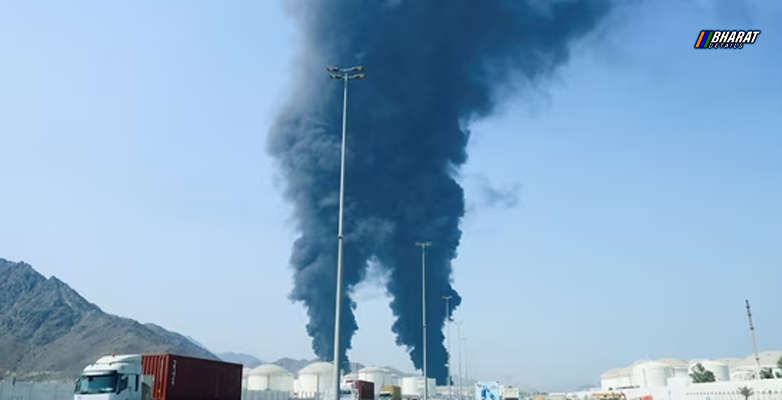
According to officials, the fire occurred in a generator situated outside the inner perimeter of the Barakah facility. Emergency teams responded immediately and managed to bring the situation under control before it could spread further.
The Abu Dhabi Media Office released an official statement confirming that the strike did not affect the nuclear reactors or compromise radiological safety standards.
While authorities stopped short of identifying who was behind the attack, the timing has drawn attention because the region continues to witness escalating friction linked to the ongoing US-Iran conflict and wider instability across the Middle East.
The UAE has faced several missile and drone-related incidents in recent months, particularly around energy facilities, maritime infrastructure, and critical transport routes. Security analysts believe attacks on strategic installations are increasingly being used as pressure tactics in regional power struggles.
What makes Sunday’s incident particularly significant is that this is reportedly the first time the Barakah Nuclear Power Plant itself has been targeted since becoming operational.
Located in Abu Dhabi’s remote western desert close to the Saudi border, the Barakah facility holds major strategic importance for the UAE. Developed with South Korean support at an estimated cost of nearly $20 billion, the project officially began operations in 2020 and remains the first and only operational nuclear power plant in the Arabian Peninsula.
The plant consists of four nuclear reactors and plays a major role in the UAE’s long-term energy diversification strategy. The Gulf nation has been trying to reduce its dependence on oil revenues while also expanding cleaner energy alternatives to meet future electricity demand.
Although the strike did not damage the plant’s core infrastructure, security experts say the symbolism of targeting a nuclear-linked site carries serious geopolitical implications.
Over the last few years, nuclear infrastructure around the world has increasingly become exposed to military tensions and conflict zones. Russia’s invasion of Ukraine brought repeated international concern over the safety of nuclear facilities such as the Zaporizhzhia Nuclear Power Plant. Similar fears have surfaced in the Gulf amid ongoing military standoffs involving Iran, Israel, and the United States.
Iran had earlier claimed that its Bushehr nuclear facility faced threats during the recent conflict period, although no major damage or radiation leak was reported there either.
Also read | 20,000 Tonne LPG Carrier Symi Arrives In Gujarat After Crossing Strait Of Hormuz Amid Middle East Tensions
Sunday’s drone strike comes at a particularly sensitive moment for the UAE’s energy and export ambitions.
The country is currently accelerating work on a major oil pipeline expansion project designed to reduce dependence on the Strait of Hormuz — one of the world’s most critical shipping chokepoints. Officials recently confirmed that Abu Dhabi Crown Prince Sheikh Khaled bin Mohammed bin Zayed Al Nahyan instructed ADNOC to speed up development of the project.
The expanded pipeline network through Fujairah is expected to significantly increase the UAE’s oil export capacity and provide an alternative route bypassing the Strait of Hormuz, where shipping disruptions have repeatedly threatened global energy supplies.
The Strait of Hormuz remains one of the most strategically important waterways in the world, handling a massive share of global crude oil and liquefied natural gas shipments. Any disruption in the region tends to immediately impact international oil prices and shipping costs.
Recent tensions between Iran and the United States have already created instability across global energy markets. Although a ceasefire between both sides has technically held in recent weeks, negotiations aimed at reducing tensions remain stalled.
The United States had halted direct attacks last month but later intensified economic pressure measures, while Iran responded with aggressive maritime positioning around regional shipping lanes. Energy analysts warn that even isolated incidents such as Sunday’s drone strike can increase investor anxiety and push oil prices upward.
The UAE, considered one of Washington’s closest allies in the Gulf region, has increasingly found itself caught in the middle of broader regional rivalries. The country also normalized ties with Israel under the Abraham Accords, a move that further complicated its strategic positioning during recent regional conflicts.
Iranian officials have previously accused the UAE of indirectly supporting actions against Tehran, allegations that Abu Dhabi has strongly rejected. UAE leaders have maintained that the country seeks regional stability but reserves the right to defend its sovereignty against any threat.
According to statements made by UAE officials in recent weeks, thousands of missile and drone attacks have targeted multiple countries in the region since the wider conflict escalated earlier this year.
For now, the immediate danger at the Barakah facility appears to have been contained. Yet the incident has highlighted a growing reality facing governments worldwide — critical infrastructure, including energy and nuclear facilities, is increasingly vulnerable to modern drone warfare.
As military technology becomes cheaper, faster, and more accessible, even highly secured installations are facing new security challenges. Experts believe nations across the Middle East may now be forced to reassess the protection systems surrounding strategic sites, especially those linked to energy production and exports.
The international community is also likely to closely monitor how the UAE responds in the coming days, particularly if further intelligence identifies the source of the strike.
For global markets already shaken by energy uncertainty and geopolitical instability, Sunday’s incident serves as another reminder that tensions in the Gulf continue to carry consequences far beyond the region itself.