Why PM Modi Asked Indians to Avoid Buying Gold for a Year Amid US-Iran War Crisis

Contents
Why PM Modi asked Indians to avoid buying gold for a year
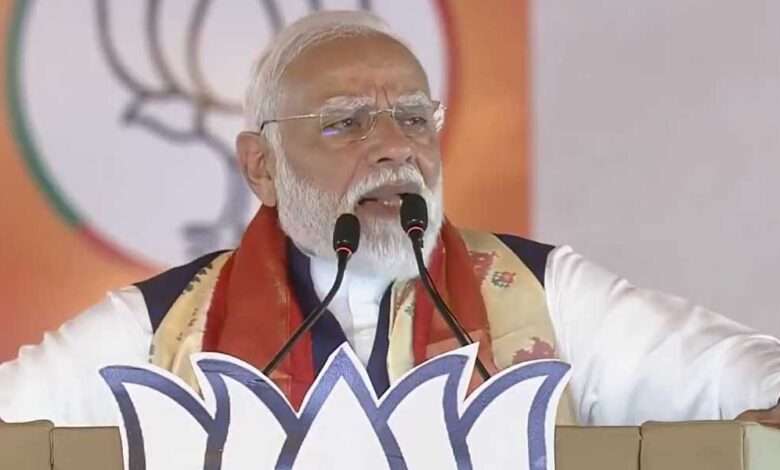
Why PM Modi asked Indians to avoid buying gold for a year has become one of the biggest economic discussions in India after Prime Minister Narendra Modi urged citizens to cut unnecessary spending amid rising global tensions caused by the ongoing US-Iran conflict. Speaking at a BJP rally in Hyderabad, the Prime Minister appealed to people to avoid purchasing gold, postpone foreign travel and reduce fuel consumption as India faces mounting pressure from soaring crude oil prices and a weakening rupee.
India depends heavily on imported crude oil, with more than 88% of its requirement coming from overseas markets. The continuing tensions in West Asia, especially disruptions around the Strait of Hormuz, have created uncertainty in global energy supplies and sharply increased oil prices across international markets.
According to the Prime Minister, the current global situation demands financial discipline and national cooperation to protect India’s foreign exchange reserves and economic stability.
PM Modi urges people to reduce fuel consumption
During his speech, PM Modi said Indians should once again adopt habits that became common during the Covid-19 pandemic. He highlighted how work-from-home culture, online meetings and virtual communication had earlier helped reduce unnecessary travel and fuel consumption.
He said the country should revive those practices wherever possible to lower petrol and diesel usage. The Prime Minister also encouraged people to use metro rail services, electric vehicles and carpooling to minimise fuel demand.
The Centre is reportedly monitoring the impact of rising international crude oil prices very closely as the global supply chain remains under pressure due to the prolonged conflict.
Government officials have warned that if the Strait of Hormuz continues to face disruptions, oil prices may remain elevated for several more months, increasing India’s import burden further.
Why gold purchases became a concern for the government
PM Modi’s appeal regarding gold purchases is linked directly to India’s foreign exchange reserves. India is one of the world’s largest importers of gold, especially during wedding and festive seasons. Since gold is largely purchased from international markets using US dollars, higher imports increase pressure on the country’s forex reserves.
The Prime Minister said citizens should avoid buying gold for at least one year in the national interest.
He stated that reducing non-essential imports would help India conserve valuable foreign exchange during a period of global uncertainty. Economists believe the government is concerned about the combined impact of rising crude oil imports and heavy gold imports on India’s trade deficit.
The rupee has already faced pressure against the US dollar in recent weeks due to rising import costs and global market volatility.
Also read: Heart Attack Vs Cardiac Arrest: Key Differences, Warning Signs And What To Do In An Emergency
US-Iran conflict pushing global oil prices higher
The ongoing tensions between the United States and Iran have intensified concerns in global financial markets. Reports indicate that US President Donald Trump rejected Iran’s latest peace proposal, resulting in renewed fears of escalation in West Asia.
Following the development, global crude oil prices reportedly crossed $105 per barrel, creating anxiety among importing nations like India.
The Strait of Hormuz remains one of the world’s most critical oil transport routes. Any disruption in the region immediately affects international oil supplies and energy prices worldwide.
Analysts say rising oil prices not only increase fuel costs but also trigger inflation across sectors such as transportation, manufacturing and food supplies.
How the war is affecting global gold prices
Traditionally, gold is considered a safe investment during geopolitical uncertainty. Whenever wars or global crises emerge, investors generally shift towards gold as a protective asset.
However, the current situation has created mixed signals in global bullion markets.
While geopolitical tensions are increasing demand for gold, rising oil prices are simultaneously raising fears of prolonged inflation and higher interest rates. Financial experts say that when interest rates stay high, investors often prefer fixed-income assets instead of gold because bullion does not generate interest returns.
Reports suggest that spot gold prices witnessed fluctuations after hopes of a peace agreement weakened and the US dollar strengthened.
Market analysts believe gold prices are currently being influenced by two opposite pressures:
- Rising geopolitical uncertainty supporting safe-haven buying
- High interest rate expectations limiting gains in bullion markets
For India, higher international gold prices create additional stress because the country imports most of its gold using foreign currency reserves.
PM Modi asks people to postpone foreign travel
Apart from fuel and gold consumption, PM Modi also urged Indians to postpone non-essential overseas travel, foreign vacations and destination weddings for at least one year.
He said spending foreign exchange on luxury travel during a global economic crisis could increase financial pressure on the country.
The Prime Minister pointed out that overseas weddings and vacations have become increasingly popular among India’s middle class, but citizens should now prioritise national economic stability.
Push for self-reliance and reduced imports
During the Hyderabad rally, PM Modi also stressed the importance of self-reliance and domestic production. He encouraged people to reduce edible oil consumption, minimise chemical fertiliser usage and support natural farming methods.
The Prime Minister said India must save foreign exchange “by every possible means” and focus more strongly on swadeshi products during the global crisis.
Meanwhile, Union Petroleum Minister Hardeep Singh Puri stated that state-run oil companies are currently absorbing major losses to prevent immediate fuel price hikes for consumers.
However, officials indicated that maintaining stable petrol and diesel prices could become increasingly difficult if international crude prices continue rising.
Congress criticises PM Modi’s remarks
The Congress party criticised the Prime Minister’s appeal and accused the Centre of failing to prepare adequately for the energy crisis.
Congress leader K. C. Venugopal said the government was shifting the burden onto ordinary citizens instead of strengthening India’s energy security mechanisms.
Despite the criticism, Union Home Minister Amit Shah defended the Prime Minister’s appeal and described it as an important step toward making India more energy-secure and economically self-reliant.
Economic uncertainty likely to remain
With the US-Iran conflict continuing and crude oil prices remaining volatile, India may face ongoing economic challenges in the coming months. Rising import costs, pressure on the rupee and concerns over inflation are expected to remain key issues for policymakers.
For now, the Centre appears focused on encouraging public participation in reducing fuel consumption and conserving foreign exchange reserves as global uncertainty continues to impact economies worldwide.