Gold Prices Surge After PM Modi’s Warning on Fuel and Foreign Exchange; Are Petrol and Diesel Prices Next?

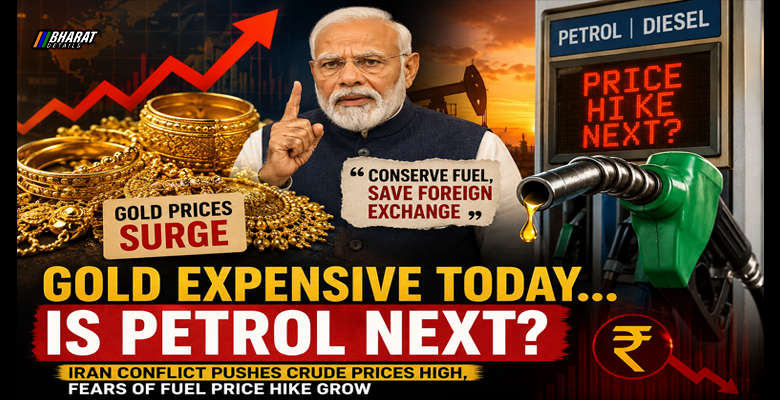
India’s growing concern over rising global oil prices and pressure on foreign exchange reserves is now beginning to affect everyday consumers. After gold prices shot up sharply following a steep increase in import duty, attention has shifted toward another major question troubling households across the country — could petrol and diesel prices rise next?
The discussion intensified after repeated remarks from Prime Minister Narendra Modi urging citizens to reduce unnecessary fuel consumption and avoid buying gold for at least a year. While the government has reassured people that India currently has enough fuel reserves, economists and financial experts believe the warnings signal deeper concerns about prolonged geopolitical instability and rising import costs.
The issue has gained national attention because both gold and crude oil are among India’s biggest imports. Any sharp rise in their prices directly affects the country’s economy, inflation levels, currency stability and household expenses.
Contents
Why Gold Prices Suddenly Became Expensive
Gold prices in India witnessed a massive jump after the government sharply increased import duty on gold and silver from 6% to 15%. The move immediately pushed domestic bullion prices to record highs.
In several markets, 24-carat gold prices reportedly crossed historic levels after the duty revision. Gold futures on MCX also surged significantly during early trading sessions, reflecting panic buying and global uncertainty.
Economists say the government’s decision was not just about taxation. It was also linked to India’s efforts to protect its foreign exchange reserves at a time when crude oil imports are becoming costlier due to tensions in West Asia.
India imports a large quantity of gold every year, especially during wedding and festive seasons. Since these purchases are made in US dollars, higher imports increase pressure on the rupee and widen the current account deficit.
This explains why PM Modi linked fuel conservation and gold purchases together during his public remarks.
Officials believe reducing non-essential imports like gold could help India manage external financial pressure if global instability continues for several months.
Also read | Why PM Modi Asked Indians To Avoid Buying Gold For A Year Amid US-Iran War Crisis
PM Modi’s Appeal Raises Public Curiosity
During recent public interactions, PM Modi appealed to citizens to reduce fuel usage wherever possible. He encouraged people to avoid unnecessary travel, consider work-from-home options and use petrol and diesel responsibly.
He also advised families to avoid purchasing gold for weddings for one year if possible.
The remarks immediately triggered widespread discussion because such public appeals are rare unless the government anticipates longer-term economic pressure.
Soon after the Prime Minister’s statement, reports emerged that officials had also been instructed to reduce vehicle usage in government convoys. Though no official fuel restrictions have been announced, economists say these signals indicate that authorities are preparing for a prolonged period of expensive energy imports.
At the same time, the Petroleum Ministry tried to calm concerns by assuring citizens that fuel supply remains stable and that India has enough reserves to manage the current situation.
Iran Conflict and the Strait of Hormuz Factor
The entire concern largely revolves around the ongoing tensions involving Iran and strategic shipping routes near the Strait of Hormuz.
The Strait of Hormuz is one of the world’s most important oil transit routes. A significant portion of global crude oil passes through this narrow shipping corridor. Any disruption there can immediately impact global crude prices.
As geopolitical tensions increased in West Asia, international crude oil prices also climbed sharply. Brent crude has remained volatile amid fears of supply disruptions and shipping risks.
India, which imports nearly 85% of its crude oil requirements, becomes highly vulnerable whenever global oil markets experience shocks.
Although Indian officials maintain that crude supply lines remain secure due to diversified sourcing from around 40 countries, rising global prices still create financial pressure because oil becomes more expensive to import.
Government officials recently stated that nearly 70% of India’s crude imports now come through routes outside the Strait of Hormuz, helping reduce direct dependence on the sensitive corridor.
Additional crude cargoes are also reportedly on the way to strengthen India’s reserves further.
Why Economists Believe Petrol Prices Could Increase
Despite the government’s assurance regarding fuel availability, economists believe pricing pressure may eventually force oil companies to increase petrol and diesel rates.
Currently, state-run oil marketing companies are believed to be absorbing part of the increase in global crude prices instead of immediately passing the burden onto consumers.
However, experts warn this strategy cannot continue forever.
If global crude oil prices remain elevated for an extended period, oil companies may face heavy financial pressure. Profitability could weaken, investments may slow down and under-recoveries could increase significantly.
Financial analysts say the government has limited options in such a situation:
- Allow oil companies to absorb losses temporarily
- Reduce excise duties to soften the burden
- Or gradually pass on higher prices to consumers
Most economists believe gradual price hikes are the most likely outcome if the international crisis continues.
Some experts estimate that petrol and diesel prices could initially rise by around ₹2 to ₹5 per litre depending on crude oil movements and tax adjustments.
While this may appear like a small increase, its impact could spread across the economy very quickly.
How Fuel Price Hikes Affect Common People
Fuel prices influence almost every sector in India.
Higher petrol and diesel rates increase transportation costs, logistics expenses and manufacturing input costs. This eventually impacts food prices, grocery bills, online deliveries, public transport and even agriculture.
Middle-class and lower-income families often feel the impact the most because daily commuting and household expenses become costlier simultaneously.
Businesses may also pass on higher operating costs to customers, slowing consumer demand across retail and automobile sectors.
Economists further warn that prolonged inflation pressure could force the Reserve Bank of India to keep interest rates elevated for longer periods. This may affect home loans, vehicle EMIs and business borrowing costs.
Also read | PM Modi Calls For Fuel Saving, Self-Reliance Amid West Asia Crisis; Lists 7 Key Steps For Citizens
RBI and IMF Signals Add to Concerns
Concerns grew further after RBI Governor Sanjay Malhotra acknowledged that fuel price hikes may eventually become unavoidable if the West Asia crisis continues for a long time.
Speaking during an international conference, he reportedly indicated that if high crude prices persist, it would only be a matter of time before some of the burden gets transferred to consumers.
The International Monetary Fund has also reportedly supported allowing domestic prices to reflect global energy costs while stating that India currently has enough economic flexibility to manage the shock.
Such statements from major financial institutions and policymakers have added credibility to market expectations of possible fuel price revisions in the coming months.
Why the Government Is Focusing on Foreign Exchange
One of the biggest concerns behind the government’s messaging is India’s foreign exchange management.
Both crude oil and gold require large dollar payments. When imports rise sharply, demand for dollars increases, putting pressure on the Indian rupee.
A weakening rupee makes imports even more expensive, creating a cycle of rising costs.
Economists say the government’s appeal to reduce fuel usage and avoid unnecessary gold purchases is aimed at slowing dollar outflows and maintaining macroeconomic stability.
This becomes particularly important during periods of geopolitical uncertainty when global investors tend to move money toward safer assets like the US dollar and gold.
What Happens Next?
For now, petrol and diesel prices remain unchanged across most Indian cities. Fuel supply is also officially stable, and there are no signs of immediate shortages.
However, the combination of rising crude oil prices, pressure on foreign exchange reserves, higher gold import duty and repeated public appeals from top policymakers has clearly increased concerns among consumers and markets.
If tensions in West Asia ease and crude prices stabilise, India may avoid major fuel price increases.
But if the crisis prolongs and global oil remains expensive for months, experts believe some level of price adjustment may eventually become unavoidable.
The coming weeks could therefore become extremely important for India’s economy, inflation trajectory and household budgets. For now, the government appears focused on balancing public reassurance with cautious preparation for a potentially prolonged global energy shock.