Sonam Wangchuk Hospitalised After 21-Day Hunger Strike as Delhi Police Shift Activist From Jantar Mantar

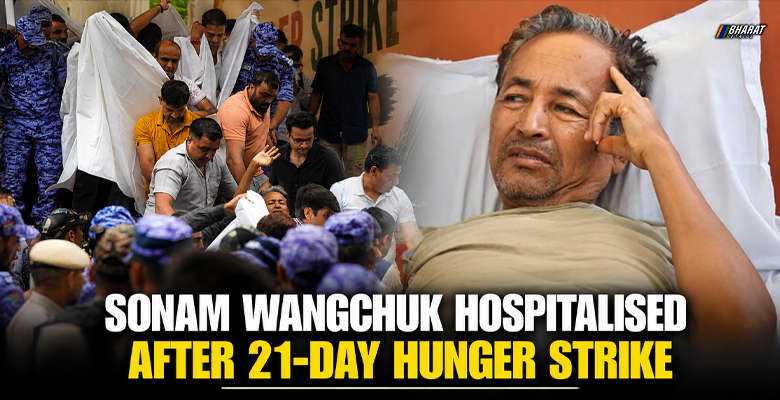
The Sonam Wangchuk Hunger Strike took a dramatic turn on Saturday after Delhi Police shifted the activist and educationist to Safdarjung Hospital, ending nearly three weeks of continuous fasting at Jantar Mantar. Authorities said the decision was taken after medical experts expressed concern over his deteriorating health and in line with directions issued by the Delhi High Court.
The early morning operation sparked tension at the protest site, where supporters attempted to prevent police personnel from moving Wangchuk. Videos circulating on social media showed security personnel surrounding the stage before an ambulance transported the activist to the government hospital.
According to officials, Wangchuk has been under close medical observation since his admission. Doctors said he remained conscious and stable but had become physically weak after consuming only salt and water during his fast. Medical teams also reported signs of dehydration and warned that prolonged fasting could lead to serious complications if left untreated.
Hospital authorities stated that his vital parameters were being monitored continuously and that further medical decisions would depend on his condition over the coming days.
Contents
Police cite medical advice and High Court directions
Delhi Police maintained that Wangchuk’s transfer was not intended to end the protest but was necessary to protect his health. Senior officers said the move was carried out after receiving medical recommendations and while complying with directions issued by the Delhi High Court regarding his wellbeing.
Officials added that police exercised restraint despite resistance from some protesters during the operation. Authorities also appealed to demonstrators to maintain peace and avoid any law-and-order situation around Jantar Mantar.
The court had earlier directed that Wangchuk’s health should be monitored regularly and that appropriate medical intervention should be provided whenever required.
Family questions hospitalisation
Soon after Wangchuk was admitted, his wife, Gitanjali J. Angmo, raised concerns over the circumstances under which he was taken to the hospital.
She stated that while she appreciated concerns regarding his health, the court had only directed regular medical monitoring and had not specifically ordered hospitalisation. She also requested that no medical treatment be administered without the family’s consent and sought independent verification of certain medical reports before any intervention.
According to family members, Wangchuk continued his fast even after being admitted and had not consumed anything beyond the salt water that he had been taking throughout the protest.
Meanwhile, Wangchuk’s personal physician said the activist was stable but remained vulnerable to electrolyte imbalance and other complications associated with prolonged fasting, making continuous monitoring essential.
Protest leaders vow to continue movement
The hospitalisation has not brought the agitation to an end.
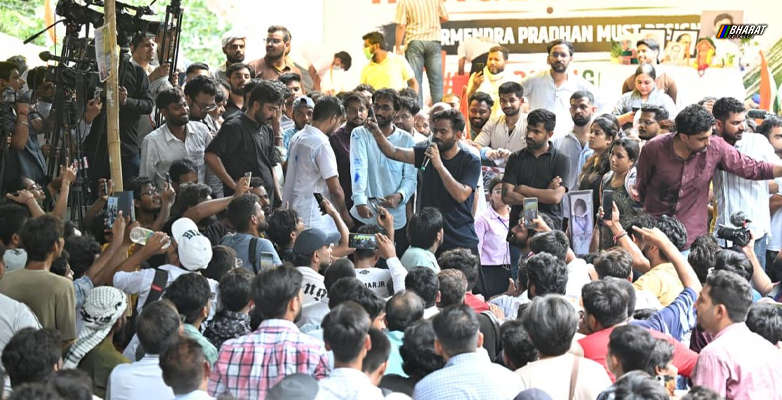
Leaders of the Cockroach Janta Party (CJP), the satirical citizens’ movement supporting Wangchuk, announced that the planned march towards Parliament would continue despite his absence. Protest organisers accused authorities of attempting to weaken the movement by removing its most recognisable face.
CJP founder Abhijeet Dipke, who has now begun an indefinite fast himself, said the campaign would continue until their demands receive a response. Protesters have reiterated their demand for accountability over alleged irregularities in competitive examinations, including the NEET examination paper leak controversy.
Supporters gathering outside the protest venue said Wangchuk’s hospitalisation had strengthened rather than weakened their resolve, with many pledging to continue peaceful demonstrations.
Support grows from opposition leaders and public figures
The developments have triggered strong political reactions across the country.
Several opposition leaders criticised the police action, describing it as unnecessary and urging the government to open dialogue with protesters instead of allowing the situation to escalate further.
Former Delhi Chief Minister Arvind Kejriwal had visited Wangchuk at the protest site shortly before his hospitalisation, appealing to the government to engage constructively with students and activists demanding reforms in the examination system.
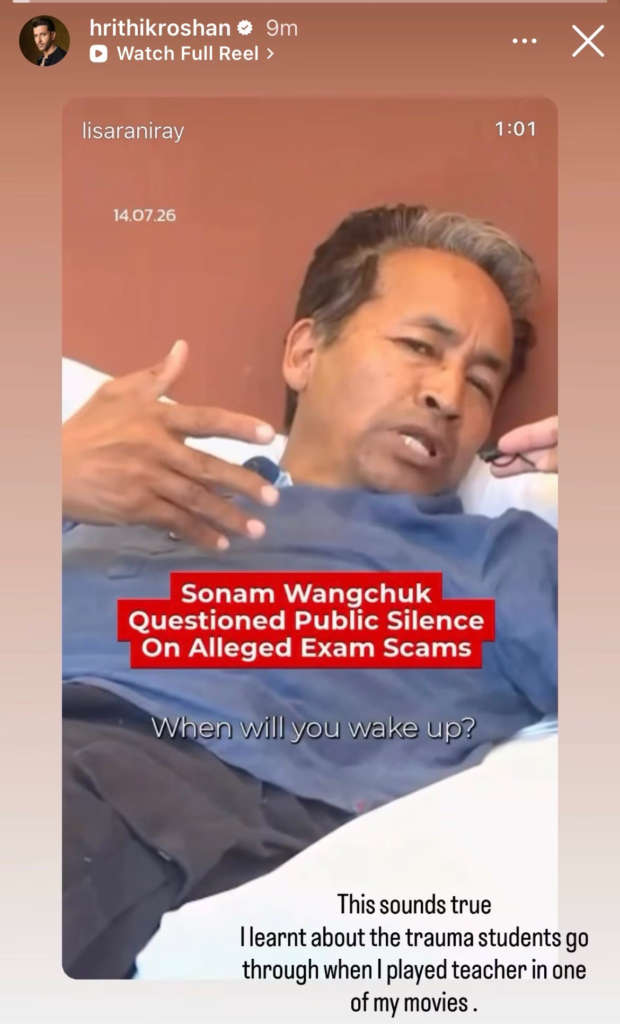
The movement also received support from actor Hrithik Roshan, who shared Wangchuk’s message on social media and said concerns about examination integrity deserved serious attention. The actor noted that students invest years preparing for competitive examinations and called for justice to ensure fairness in the education system.
Why the protest began
The current movement traces its roots to growing public concern over alleged irregularities in competitive examinations, particularly the NEET examination. Earlier this year, allegations of paper leaks and other examination-related issues triggered widespread criticism from students, parents and education experts.
The Cockroach Janta Party (CJP), an online satirical citizens’ movement, emerged as one of the prominent voices demanding accountability and structural reforms in India’s examination system. Over time, the campaign gained support from student groups, civil society organisations and individuals from different parts of the country.
Wangchuk joined the agitation in late June, launching an indefinite hunger strike to draw attention to what he described as the need for transparent and credible examination processes. Throughout the fast, he repeatedly maintained that the movement was not directed against any individual but aimed at restoring public confidence in the country’s education system.
__________________________________________________________________________________________________
__________________________________________________________________________________________________
Health concerns intensified after three weeks of fasting
Medical professionals monitoring Wangchuk’s health said he had lost close to 9.5 kilograms during the course of the hunger strike. Doctors also warned that prolonged fasting significantly increases the risk of dehydration, electrolyte imbalance, muscle loss and complications affecting vital organs.
His personal physician said one of the major concerns was the possibility of hypokalemia, a condition caused by low potassium levels that can affect heart rhythm and muscle function. While Wangchuk remained conscious and alert, doctors stressed that continuous observation was necessary to prevent any sudden deterioration in his condition.
Hospital officials have not indicated how long he may remain under medical supervision.
Separate incidents reported in Assam
The controversy surrounding Wangchuk also reached Assam, where police detained two youths accused of painting his portrait on a public wall in Guwahati. According to officials, the artwork was created on government property without permission.
Police registered a case against the two individuals and said another investigation was underway after a separate portrait of Wangchuk appeared on a flyover pillar elsewhere in the city. Authorities stated that while citizens are free to express opinions, public infrastructure cannot be defaced.
New Delhi Police Commissioner oversees first major operation
The transfer of Wangchuk to Safdarjung Hospital also became one of the first significant law-and-order operations under newly appointed Delhi Police Commissioner Anurag Kumar, who assumed charge a day before the incident.
Police sources said maintaining public order while ensuring the activist received timely medical attention remained the administration’s priority. Officials added that adequate security arrangements had been put in place around Jantar Mantar and other parts of central Delhi to prevent any untoward incidents.
What happens next?
Although Wangchuk is now under medical supervision, the protest itself appears far from over. Organisers have announced that demonstrations and the proposed march towards Parliament will continue, with other volunteers stepping forward to carry the movement ahead.
Whether the government chooses to engage directly with protesters or continues to rely on administrative measures will likely determine the next phase of the agitation. As public attention remains focused on both Wangchuk’s health and the broader debate over examination reforms, the coming days could prove significant for the future of the movement.
The developments have once again placed the spotlight on issues of transparency in public examinations, the right to peaceful protest and the balance between individual liberty and state intervention during prolonged demonstrations.