India Cuts Excise Duty on Petrol and Diesel, Dismisses Shortage and Lockdown Rumours

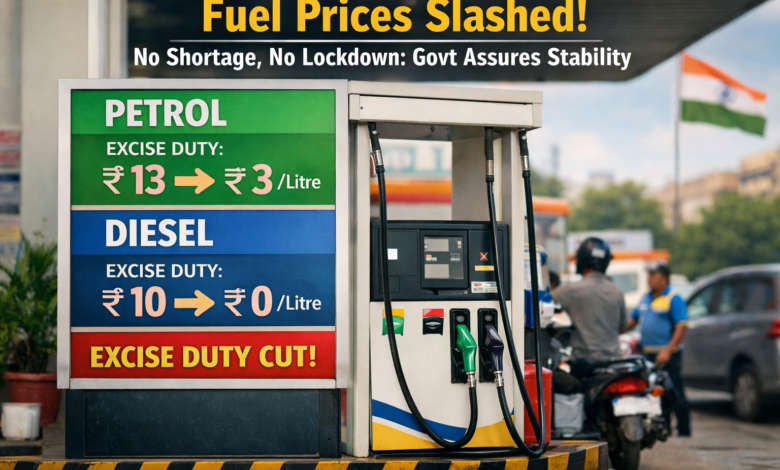
Excise duty cut on petrol and diesel has been announced by the Government of India in a move aimed at stabilising fuel prices and preventing panic amid global uncertainty. The Centre has reduced excise duty on petrol from ₹13 to ₹3 per litre and on diesel from ₹10 to zero, offering significant relief at a time when several countries are witnessing sharp fuel price hikes.
Officials said the decision comes against the backdrop of ongoing global tensions that have disrupted supply chains and pushed fuel prices higher across international markets. While many nations are struggling with shortages and soaring costs, India has taken a proactive step to cushion consumers and maintain price stability.
The government has assured citizens that the country has sufficient reserves of petrol, diesel, and LPG. Authorities emphasised that there is no plan to increase fuel prices despite global trends, and instead, efforts are being made to keep them under control. This reassurance is intended to counter growing concerns among the public, particularly after reports of panic buying surfaced in several cities.
In recent days, videos from places like Indore showed people attempting to store petrol in bottles and large containers. In one instance, a man was reportedly seen trying to fill a 500-litre water tank with fuel. Such incidents have raised safety concerns, prompting authorities to urge petrol pump operators to strictly enforce regulations and prevent unsafe practices.
The government has also strongly denied rumours of a nationwide lockdown. Statements from officials clarified that while vigilance is necessary, there is no decision to impose restrictions similar to those seen during the COVID-19 pandemic. Strict legal action has been warned against individuals spreading misinformation related to lockdowns or fuel shortages.
The panic has not been limited to petrol and diesel. LPG supply has also been affected by rumours, with many households seeking refills much earlier than usual. Distributors have reported an unusual surge in demand, with customers requesting cylinders within 7–10 days instead of the typical 40–45 day cycle. Authorities reiterated that LPG stocks are adequate and urged citizens to avoid unnecessary hoarding.
Globally, the situation remains volatile. Countries such as Sri Lanka and Pakistan have faced severe fuel crises, while others like the United States, Canada, and Australia have seen notable price increases. In contrast, India’s policy intervention aims to shield consumers from such shocks and maintain economic stability.
Prime Minister Narendra Modi had earlier addressed the issue in Parliament, highlighting the need for preparedness without causing panic. He indicated that while challenges similar to the COVID period could arise, India is well-equipped to handle crises with adequate reserves and strong policy measures.
Experts believe the excise duty reduction will ease inflationary pressures and support household budgets, especially at a time when global commodity prices remain unpredictable. However, they also caution that sustained stability will depend on how international markets evolve in the coming weeks.
For now, the government’s message is clear: there is no shortage, no immediate price hike, and no lockdown. Citizens are being urged to rely on official information and avoid reacting to unverified claims circulating on social media.