Meta Apologises After PM Modi’s Facebook Post Removal, Government Raises Concerns Over Content Boosting and Platform Accountability

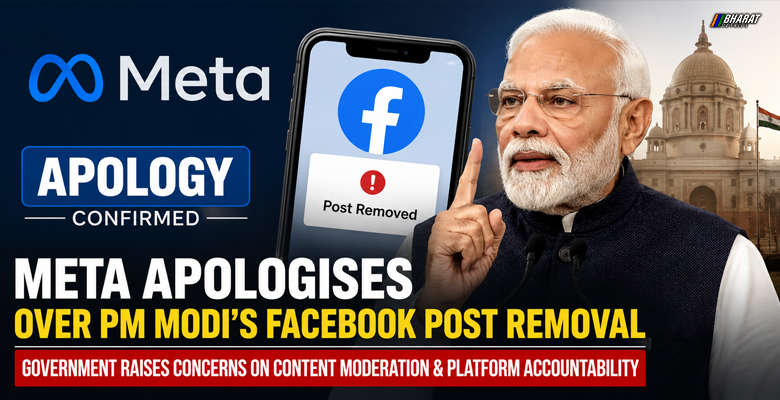
Meta apologises PM Modi Facebook post controversy has once again brought the spotlight on how large social media platforms manage content and comply with Indian laws. The issue gained fresh attention after Meta admitted to operational lapses during discussions with the Government of India and apologised for the temporary removal of Prime Minister Narendra Modi’s Facebook post last month.
The development follows a series of meetings between Meta’s senior global executives and officials from the Ministry of Electronics and Information Technology (MeitY), where concerns were raised over content moderation, algorithm-driven recommendations, illegal content, and the company’s responsibilities under Indian law.
According to officials, Meta’s delegation, led by Global Affairs head Joel Kaplan, met Information Technology Minister Ashwini Vaishnaw and IT Secretary S. Krishnan. During the discussions, the company reportedly acknowledged that mistakes had occurred in the functioning of its platforms and expressed regret over the incident involving the Prime Minister’s Facebook post.
Kaplan is understood to have apologised on behalf of the company for the error that temporarily restricted the post. Meta had earlier maintained that the removal was caused by an unintended technical issue within its automated AI-based content moderation system.
The post, which briefly disappeared from Facebook, featured Prime Minister Narendra Modi addressing India’s youth and assuring strict action against examination paper leaks. It had first been uploaded on Instagram before later appearing on Facebook. The content was eventually restored after the company identified the mistake.
Contents
Government Raises Broader Questions Beyond One Post
Officials indicated that the discussions extended far beyond the temporary removal of a single post. The government reportedly expressed concern over Meta’s overall content moderation policies, the operation of its recommendation algorithms, and the handling of sensitive content across Facebook, Instagram and WhatsApp.
Government representatives also questioned whether Meta could continue to claim the legal protections available to online intermediaries if its systems actively decide which content users see instead of functioning as a neutral platform.
Under India’s Information Technology Act, intermediaries receive certain legal protections, commonly referred to as “safe harbour,” provided they comply with applicable laws and primarily act as platforms hosting third-party content. Officials argued that algorithm-driven recommendations and content curation raise important questions about whether such protections should continue to apply in the same manner.
The matter is expected to remain under discussion as the government continues examining the role of major digital platforms operating in India.
Meta Reportedly Admits Paid Content Promotion Issues
During the meeting, government officials said Meta also acknowledged that significant sums had been spent to promote certain categories of content through paid boosting mechanisms on its platforms.
While officials referred to these admissions during briefings, no additional details were provided regarding the nature of the promoted content or the specific campaigns involved. Meta has not publicly elaborated on these remarks following the meetings.
The issue has nevertheless added another dimension to ongoing discussions about transparency in algorithmic recommendations and paid digital promotions.
Concerns Over Deepfakes and Illegal Content
The government also raised several other issues relating to digital safety and platform governance.
According to officials familiar with the discussions, concerns included the spread of child sexual abuse material, the misuse of artificial intelligence to create deepfakes, safeguards for verified and high-profile accounts, algorithmic bias, and compliance with Indian regulations.
Officials said Meta acknowledged shortcomings in certain operational areas and indicated that the company is working to strengthen its internal systems to reduce similar incidents in the future.
The government has consistently emphasised that social media companies operating in India must maintain stronger oversight over harmful and illegal content while ensuring greater accountability in content moderation decisions.
Why the Facebook Post Triggered the Controversy
The controversy began after Prime Minister Modi’s Facebook post became temporarily unavailable on July 23.
The video message focused on examination paper leaks and assured students that the government would take strict action against those responsible for compromising public examinations. Because the message came from the country’s Prime Minister, its brief removal immediately attracted widespread attention.
Meta later restored the content and stated that the issue resulted from an unintended error in its automated moderation technology. The company apologised after the restoration, describing the incident as a technical mistake rather than a deliberate moderation decision.
However, government officials maintained that the explanation alone was insufficient and sought a detailed understanding of how the platform’s systems allowed such an error to occur.
Government Calls for Greater Accountability
Officials have stressed that the discussions with Meta are part of a broader effort to improve accountability among large technology companies operating in India.
Apart from the Facebook incident, regulators have also examined other issues involving online safety and compliance, including concerns over harmful advertisements and illegal content appearing on digital platforms.
The government has indicated that conversations with Meta will continue, with officials expected to seek further clarification on content moderation practices, platform governance, and legal compliance.
Meanwhile, a Parliamentary Standing Committee has also reportedly sought an explanation over the removal of the Prime Minister’s Facebook post and called for accountability from the company’s leadership.
What Happens Next?
The meetings between Meta and the Indian government signal that scrutiny of global technology companies is likely to intensify in the coming months. Questions surrounding artificial intelligence, algorithmic transparency, user safety, and platform responsibility are becoming increasingly central to digital governance.
While Meta has apologised for the temporary removal of the Prime Minister’s Facebook post and acknowledged operational lapses, government authorities have made it clear that they expect stronger safeguards and better compliance with Indian laws going forward.
The outcome of future discussions could influence how social media platforms manage content moderation, algorithm-driven recommendations, and regulatory obligations in one of the world’s largest digital markets.