CJP Victory Party Video Sparks Questions Over Hotel Celebration and Protest Funding

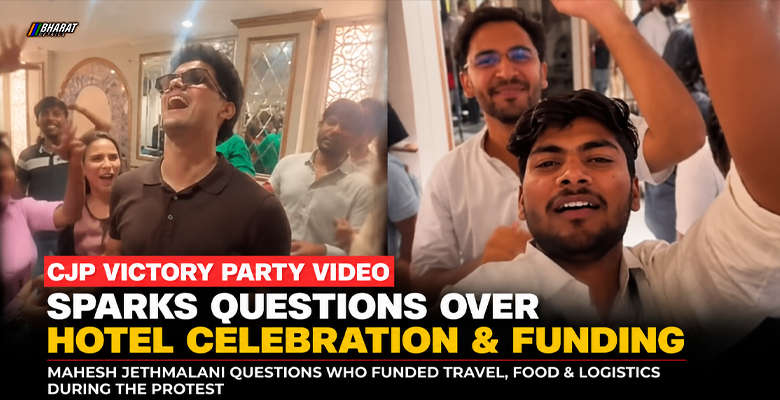
CJP victory party videos showing members of the Cockroach Janta Party celebrating at a Delhi hotel have triggered a fresh political controversy, with questions being raised online about the timing of the gathering and how the group’s prolonged protest campaign was financed.
The videos surfaced on social media shortly after Union Education Minister Dharmendra Pradhan resigned amid weeks of protests over alleged irregularities in competitive examinations, including the NEET-UG controversy. The CJP had made Pradhan’s resignation one of its central demands during its extended agitation at Delhi’s Jantar Mantar.
Contents
What the viral videos show
The clips circulating online appear to show CJP spokespersons Saurav Das and Ashutosh Ranka, along with other members of the group, dancing to Bollywood music during a celebration at a hotel in Delhi.
The gathering was presented by the group as a celebration following Pradhan’s resignation. The CJP had publicly described the minister’s departure as a victory for the student movement after maintaining pressure through its protest campaign.
However, the videos have opened up a different conversation on social media. Critics have questioned whether a celebration was appropriate so soon after a contentious protest campaign that involved clashes, police action and a wider dispute over examination reforms.
There have also been claims online that the gathering took place at a five-star property. That specific description has not been independently established, and it is therefore important to distinguish the verified existence of a hotel gathering from claims about the category or cost of the venue.
Mahesh Jethmalani questions protest funding
Senior advocate and BJP Rajya Sabha MP Mahesh Jethmalani was among those who reacted to the video.
In a post on X, Jethmalani criticised the optics of CJP leaders celebrating after Pradhan’s resignation and raised broader questions about the financial arrangements behind the movement.
He specifically questioned who had paid for travel, food, accommodation, equipment and other logistical requirements during the agitation.
The questions have added a financial dimension to what had until now largely been a political and education-related debate. However, raising questions about funding is not the same as establishing that any financial irregularity took place. No evidence establishing wrongdoing by the CJP has been presented in the material currently available.
Why the timing has become controversial
The criticism is largely centred on the contrast between the seriousness of the issues that brought protesters onto the streets and the celebratory mood seen in the videos.
The CJP’s agitation emerged from anger over alleged examination irregularities and demands for greater accountability in the education system. The group also pressed for action concerning cases linked to the examination controversy, withdrawal of cases against protesters and compensation for families affected by student deaths.
For supporters, Pradhan’s resignation represented a major political outcome after weeks of mobilisation. The CJP publicly celebrated the development as evidence that sustained student pressure could produce a government response.
For critics, however, the videos raise questions about whether the movement’s leadership is maintaining the same seriousness expected from a campaign built around students’ academic and career concerns.
That disagreement is now playing out online, where the celebration footage has been widely discussed alongside the original demands of the agitation.
What happened after Pradhan’s resignation?
Pradhan resigned as Union Education Minister on July 25 after sustained pressure over the examination controversy. In his resignation communication, he said the issue was not a matter of individual prestige and indicated that he was taking moral responsibility amid the developments surrounding the controversy.
The CJP subsequently called off its extended protest after negotiations with the Centre, with the group saying that its key demands had been addressed. Reports said the discussions also covered examination reforms, action related to cases against protesters and compensation-related demands.
The government has also moved towards wider examination-system reforms following the protests. Prime Minister Narendra Modi announced a task force to overhaul the examination system, with the government indicating that measures would focus on making examinations more transparent, secure and technology-driven.
The bigger question goes beyond one celebration
The viral footage has shifted part of the public conversation from the original examination controversy to the conduct and financing of the protest movement.
That shift makes transparency particularly important. If questions about the CJP’s expenditure and funding continue, the most useful response would be documentary clarity about how the movement’s travel, accommodation, food, equipment and other logistical expenses were met.
At the same time, the existence of a celebration video by itself does not establish financial misconduct, nor does it determine whether the movement’s demands were legitimate.
The larger issue remains the credibility of India’s examination system and whether the commitments made after the protests translate into practical reforms for students. With the protest phase now over and the government promising changes, public scrutiny is likely to move from the streets to implementation.
For the CJP, the next test may therefore be more difficult than organising a successful agitation: demonstrating that the movement can maintain transparency, accountability and focus after its most visible political demand has been achieved.