Anti-Paper Leak Bill 2026 Passed in Lok Sabha Amid Rahul Gandhi-Amit Shah Row Over Student Protest

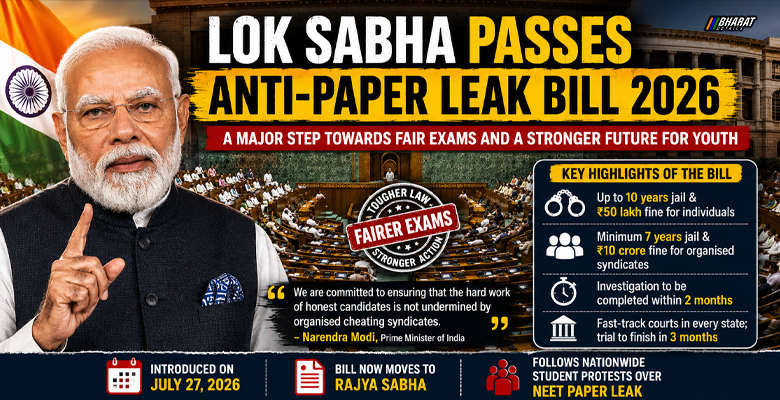
The Anti-Paper Leak Bill 2026 cleared the Lok Sabha on Wednesday, July 29, through a voice vote, as Parliament witnessed another heated confrontation over the handling of student protests and allegations of excessive police force.
The Public Examinations (Prevention of Unfair Means) Amendment Bill, 2026 seeks to strengthen the existing 2024 law by substantially increasing punishments for examination fraud and introducing tighter timelines for investigation and trial. The Bill was introduced by Union Minister Jitendra Singh on July 27 and now needs to clear the Rajya Sabha before it can move ahead in the legislative process.
The legislation was passed amid Opposition sloganeering, with proceedings overshadowed by a political dispute involving Leader of Opposition Rahul Gandhi and the government over the police response to student protesters at Delhi’s Jantar Mantar.
Contents
What changes under the proposed law?
The amendment is designed to make the legal consequences of examination malpractice significantly tougher.
For an individual found guilty of using unfair means, the proposed punishment increases to between five and 10 years in prison, compared with three to five years under the 2024 law. The maximum fine would rise from ₹10 lakh to ₹50 lakh.
The Bill also takes aim at service providers and organised networks involved in examination fraud. The maximum fine for a service provider would rise to ₹5 crore, while the period for which a service provider involved in malpractice can be barred from conducting public examinations would increase from four years to eight years.
For organised examination-related crime, the proposed minimum imprisonment rises to seven years, with a minimum fine of ₹10 crore.
The legislation also proposes a special task force for investigation and requires investigations to be completed within two months.
Every state and Union Territory would have to designate a Court of Session as a Special Fast Track Court for offences covered by the law. Trials are proposed to be conducted on a day-to-day basis and completed within three months of the chargesheet being filed, subject to the provisions of the Bill.
Rahul Gandhi’s allegations trigger uproar
The legislative debate became politically charged when Rahul Gandhi raised the issue of police action during the recent student agitation.
Gandhi alleged in the Lok Sabha that Union Home Minister Amit Shah was responsible for authorising the use of force against students during the protest. He specifically referred to allegations that pellet guns had been used against protesters.
The allegation drew an immediate response from the Treasury benches. Parliamentary Affairs Minister Kiren Rijiju demanded evidence, while the government rejected Gandhi’s claims.
Union Minister Jitendra Singh said the allegation was factually incorrect and maintained that no firing order had been issued and that tear gas had been used during the protest. The government’s position has been that the allegations of pellet-gun use are not supported by the facts presented by authorities.
The exchange added another layer of confrontation to an already contentious debate over examination integrity and the government’s handling of the student movement.
Bill follows weeks of examination protests
The legislation comes against the backdrop of a major student-led agitation over the alleged NEET-UG 2026 paper leak and wider concerns about the security and credibility of competitive examinations.
The protests gained momentum in Delhi, with the Cockroach Janta Party (CJP) emerging as one of the prominent groups associated with the agitation. The movement eventually resulted in Education Minister Dharmendra Pradhan stepping down on July 25 after weeks of pressure surrounding the examination controversy.
The protest movement also focused on compensation for families of students who died by suicide following examination-related distress and the withdrawal of police cases against protesters. The government subsequently agreed to demands that brought the agitation to an end.
The controversy has therefore extended beyond the question of punishment for paper leaks. It has also raised broader concerns about examination administration, accountability and the ability of authorities to protect students from disruptions that can affect their education and careers.
What happens next?
The Bill’s passage in the Lok Sabha is not the end of the legislative process. It must now be considered by the Rajya Sabha.
If approved by the Upper House and subsequently receives presidential assent, the amendments would strengthen the existing legal framework against unfair means in public examinations.
The proposed law covers examinations conducted by authorities including the Union Public Service Commission, Staff Selection Commission, Railway Recruitment Boards, Institute of Banking Personnel Selection and the National Testing Agency, among others.
But tougher punishment alone may not settle the larger debate. The proposed legislation focuses heavily on deterrence, investigation and speedy prosecution. The effectiveness of the framework will ultimately depend on how securely examinations are conducted, how quickly suspected leaks are detected and whether investigations and trials actually meet the proposed deadlines.
For students and families who depend on competitive examinations for education and employment opportunities, the real test will be whether these changes translate into greater confidence in the examination system—not simply harsher penalties after a leak has already occurred.