Heart Attack vs Cardiac Arrest: Key Differences, Warning Signs and What to Do in an Emergency

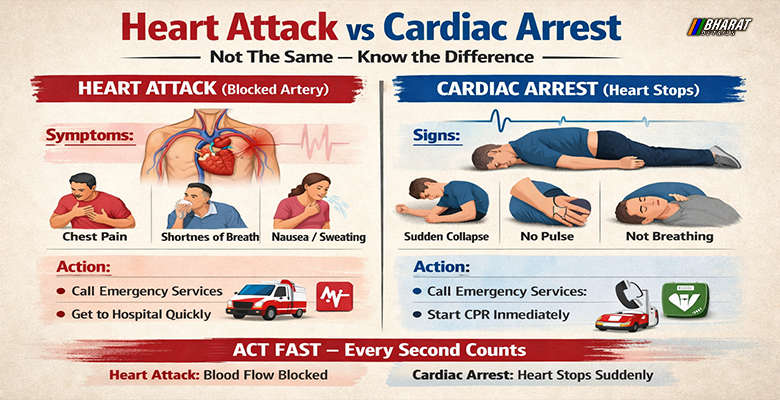
Heart attack vs cardiac arrest is often misunderstood, with many people using the terms interchangeably. However, doctors stress that these are two very different medical emergencies—each requiring urgent but distinct responses.
A heart attack is primarily a circulation problem. It occurs when blood flow to a part of the heart muscle is blocked, usually due to a clot in the coronary arteries. This blockage deprives the heart tissue of oxygen, causing damage over time. Despite this, the heart typically continues to beat, and the person may remain conscious during the episode.
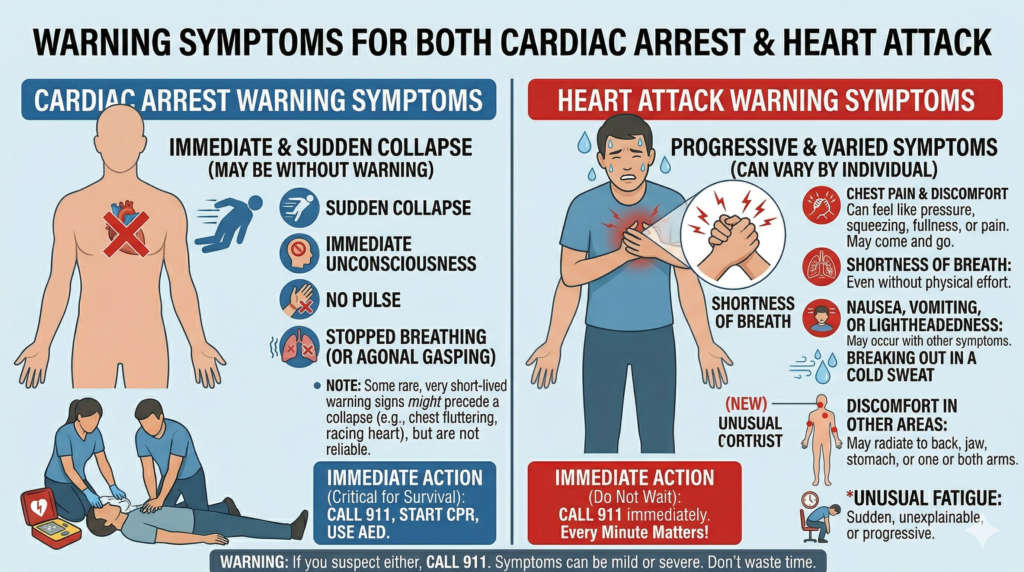
Cardiac arrest, on the other hand, is an electrical failure of the heart. It happens suddenly, often without warning, when the heart’s electrical system malfunctions and stops the heart from pumping blood. Within seconds, the person collapses, loses consciousness, and stops breathing. Without immediate intervention, cardiac arrest can become fatal within minutes.
Contents
Difference Between Cardiac Arrest and Heart Attack
Understanding the distinction can be life-saving. While both conditions are serious, cardiac arrest is considered more immediately dangerous because survival depends on rapid action—especially cardiopulmonary resuscitation (CPR) and the use of an automated external defibrillator (AED).
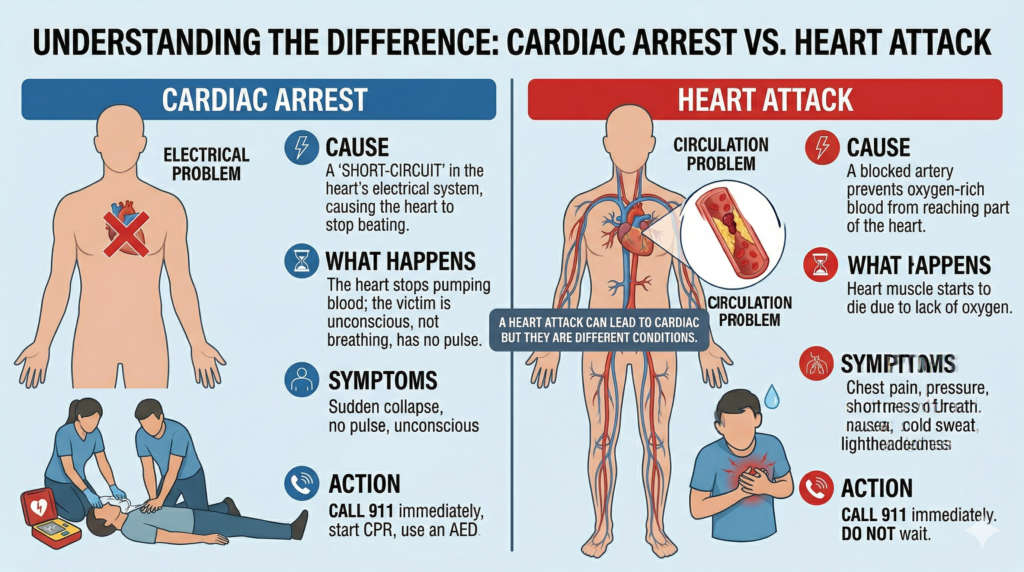
Medical experts note that a heart attack can sometimes trigger cardiac arrest. When heart muscle is damaged due to lack of oxygen, it may lead to abnormal heart rhythms, which can stop the heart altogether. However, cardiac arrest can also occur independently due to electrical disturbances, genetic conditions, or structural heart issues.
Recognising the Warning Signs
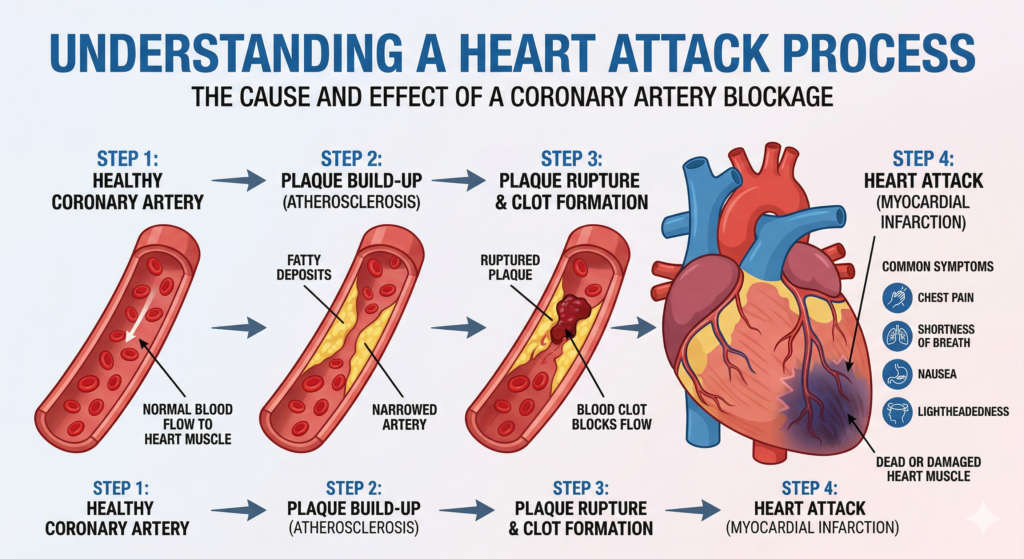
A heart attack usually develops gradually. Common symptoms include chest pain or pressure, shortness of breath, cold sweats, nausea, fatigue, and discomfort that may radiate to the arms, neck, jaw, or back. In some cases, especially among women, symptoms can be less obvious and may include unusual tiredness or mild discomfort rather than severe chest pain.
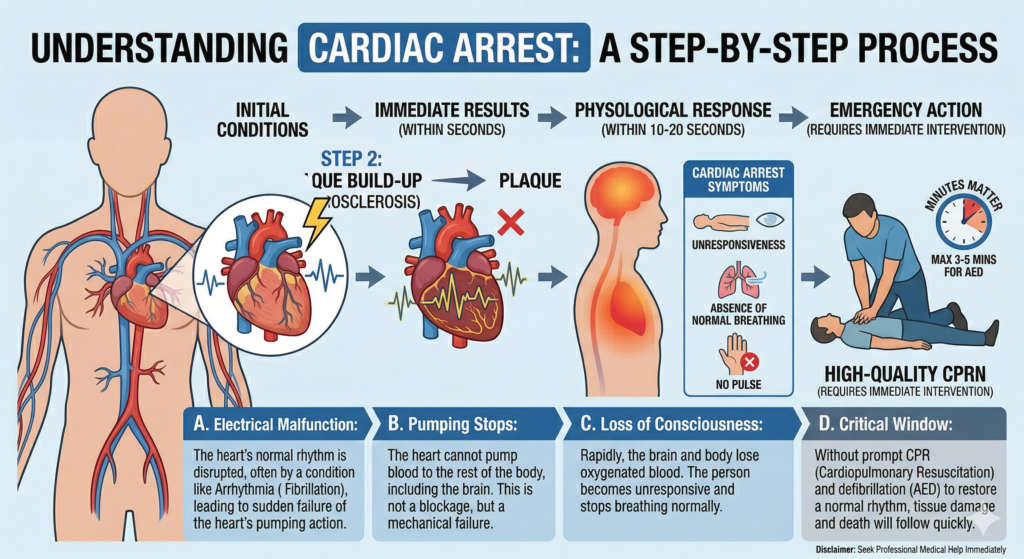
Cardiac arrest, in contrast, is abrupt. The key warning signs include sudden collapse, no pulse, loss of consciousness, and the absence of breathing or gasping for air. Some people may experience palpitations, dizziness, or chest discomfort shortly before the event, but often there is little to no warning.
What Should You Do?
In both situations, immediate action is critical.
If you suspect a heart attack, call emergency services right away. Keeping the person calm and ensuring they receive medical help quickly can significantly reduce heart damage. Ambulance teams can begin treatment on the way to the hospital, improving survival chances.
In the case of cardiac arrest, every second counts. Call emergency services immediately, begin CPR, and use an AED if one is available. Health authorities say that early CPR can double or even triple a person’s chances of survival.
Which Comes First?
Doctors explain that a heart attack often precedes cardiac arrest, but not always. While a blocked artery can lead to electrical instability in the heart, cardiac arrest can also occur without any prior heart attack.
Regular health check-ups can play a crucial role in detecting early warning signs of heart-related conditions before they turn serious. To avoid such sudden medical emergencies, timely testing and diagnosis are essential. You can explore trusted diagnostic services here: Agilus Diagnostics – Dr. Phadke Labs In Kandivali West 400067 | Best Pathology Lab Near You
Cardiovascular diseases remain a leading cause of death worldwide, including in India. Increasing awareness about symptoms and emergency response can make a critical difference. Many public spaces are now being equipped with AEDs, and basic CPR training is being encouraged as part of community health initiatives.
Recognising whether it is a heart attack or cardiac arrest—and acting quickly—can save lives. Experts emphasise that hesitation or confusion during such emergencies can prove costly, making public awareness not just helpful, but essential.
What is the main difference between a heart attack and cardiac arrest?
A heart attack is caused by a blockage in blood flow to the heart muscle, while cardiac arrest happens due to an electrical malfunction that suddenly stops the heart from beating.
Are heart attack and cardiac arrest the same?
No, they are different medical emergencies. A heart attack affects blood circulation, whereas cardiac arrest is an electrical failure of the heart.
Which is more dangerous—heart attack or cardiac arrest?
Cardiac arrest is more immediately life-threatening because the heart stops completely, and death can occur within minutes without CPR or defibrillation.
Can a heart attack lead to cardiac arrest?
Yes, a heart attack can trigger cardiac arrest due to damage in the heart muscle, but not all heart attacks result in cardiac arrest.
What are the early warning signs of a heart attack?
Common signs include chest pain or pressure, shortness of breath, sweating, nausea, fatigue, and pain spreading to the arms, neck, jaw, or back.
What are the warning signs of cardiac arrest?
Cardiac arrest usually occurs suddenly with symptoms like collapse, no pulse, unconsciousness, and stopped breathing.
How can I tell if someone is having a heart attack or cardiac arrest?
If the person is conscious and experiencing symptoms like chest pain, it may be a heart attack. If they are unresponsive, not breathing, and have no pulse, it is likely cardiac arrest.
What should I do during a heart attack?
Call emergency services immediately, keep the person calm, and ensure they get medical help as quickly as possible.
What should I do during cardiac arrest?
Call emergency services, start CPR immediately, and use an AED if available. Quick action can significantly improve survival chances.
Can cardiac arrest happen without a heart attack?
Yes, cardiac arrest can occur independently due to electrical disturbances, genetic conditions, or other heart-related issues.
Who is at higher risk of heart attack or cardiac arrest?
People with high blood pressure, diabetes, obesity, smoking habits, or a family history of heart disease are at higher risk.
Can women have different heart attack symptoms than men?
Yes, women may experience less obvious symptoms like fatigue, nausea, shortness of breath, or back and jaw pain instead of severe chest pain.
How important is CPR in cardiac arrest?
CPR is critical. It helps maintain blood flow to vital organs and can double or triple the chances of survival until medical help arrives.
Is recovery possible after cardiac arrest?
Yes, but survival depends on how quickly CPR and defibrillation are provided. Immediate response greatly improves outcomes.
Can lifestyle changes reduce the risk?
Yes, maintaining a healthy diet, exercising regularly, avoiding smoking, and managing stress can significantly lower the risk of heart-related emergencies.