Raghav Chadha Explains Exit from AAP as Seven Rajya Sabha MPs Shift to BJP

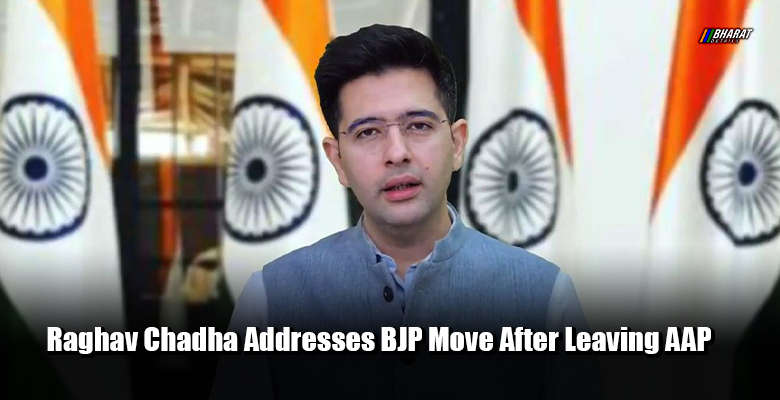
Raghav Chadha BJP switch has sparked a fresh political debate after the former Aam Aadmi Party (AAP) leader publicly explained his decision to leave the party and align with the Bharatiya Janata Party (BJP). The development comes amid a significant shift within AAP’s parliamentary ranks.
In a video shared on social media, Raghav Chadha addressed both supporters and critics who questioned his sudden move. He said he had received a mix of congratulatory messages and queries about his political decision over the past few days.
Chadha emphasised that his entry into politics was driven by purpose rather than ambition. Reflecting on his long association with AAP, he noted that he had spent over a decade contributing to the party as one of its early members. However, he claimed that the party’s internal environment had changed over time.
According to him, the AAP no longer reflects the ideals it once stood for. He alleged that the working atmosphere had become restrictive, with limited space for independent thought or parliamentary engagement. Describing his situation, Chadha said he felt like “the right person in the wrong party.”
Before making his decision, he said he considered multiple options, including stepping away from politics entirely or attempting reforms from within. Ultimately, he chose to continue in public life by joining another political platform.
The situation escalated further when Chadha announced that six other AAP Rajya Sabha members would join him in merging with the BJP. This group reportedly includes Ashok Mittal, Sandeep Pathak, Rajinder Gupta, Vikramjeet Singh Sahney, Swati Maliwal and Harbhajan Singh.
This collective move carries legal and political weight. With seven out of ten AAP members in the Rajya Sabha shifting together, the action falls within constitutional provisions that allow such mergers without triggering anti-defection penalties.
The development is being seen as a major setback for the Aam Aadmi Party, particularly ahead of key political contests. The shift could influence the party’s standing in states like Punjab, where governance and electoral performance remain under scrutiny.
Also read | E20 Petrol Mandatory In India From April 1: What It Means For Vehicles, Fuel Costs, And The Environment
Reacting briefly to the development, AAP chief Arvind Kejriwal criticised the move, accusing the BJP of undermining regional political interests.
The coming weeks are expected to clarify the broader implications of this shift, both within Parliament and in state-level politics. Analysts suggest that such realignments could reshape alliances and voter perceptions ahead of future elections.