India Bans Chinese Internet-Connected CCTV Cameras and Routers Over Security Concerns

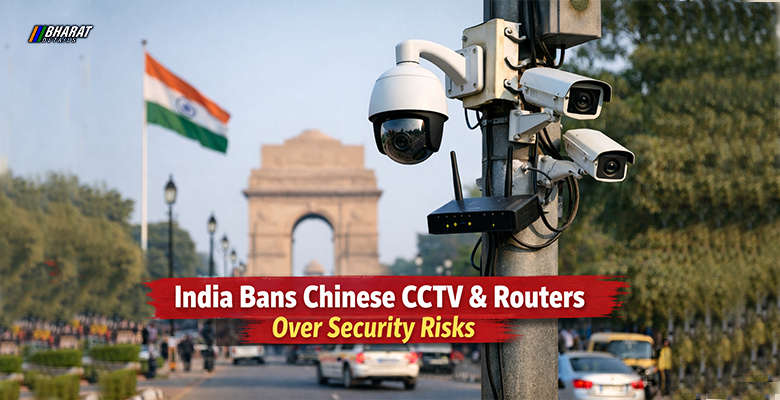
India bans Chinese CCTV cameras and routers as part of a broader push to strengthen cybersecurity and protect critical infrastructure. Starting April 1, the government has enforced stricter certification norms for all internet-connected surveillance devices sold in the country, effectively blocking several Chinese manufacturers from the Indian market.
The move comes under the Standardisation Testing and Quality Certification (STQC) framework, which now requires mandatory approval for CCTV cameras and related hardware before they can be imported or sold. Companies that fail to meet these requirements will not be allowed to operate in India.
Officials have raised serious concerns about potential vulnerabilities in foreign-made surveillance devices, particularly those manufactured by Chinese firms such as Hikvision, Dahua Technology, and TP-Link. Authorities are reportedly denying certification not only to these brands but also to devices that rely on Chinese-origin chipsets. Without STQC clearance, these products are effectively banned from the market.
At the core of the new rules is a strong focus on cybersecurity. The government wants to ensure that connected devices do not become entry points for hacking, data theft, or unauthorised surveillance. Under the updated guidelines, manufacturers must eliminate hardcoded passwords and hidden backdoors, implement secure firmware systems, and ensure encrypted communication protocols. Devices must also be resistant to tampering at both hardware and software levels.
The concern is not theoretical. In 2021, the government informed Parliament that nearly one million CCTV cameras installed across government institutions were sourced from Chinese companies. Officials warned that such devices could potentially transmit sensitive video data to servers located outside India.
Global developments have further heightened these fears. Cybersecurity researchers have recently highlighted how consumer-grade cameras were targeted during geopolitical conflicts in the Middle East, with attempts to exploit them for surveillance and intelligence gathering. Similar concerns have been raised in conflicts involving Russia and Ukraine, where both sides have accused each other of hacking surveillance infrastructure.
Indian authorities believe such risks could pose a serious threat to national security if left unchecked. In recent months, there have also been instances of individuals being arrested for allegedly spying on sensitive installations, reinforcing the urgency of tighter controls.
India’s move aligns with a growing global trend. Countries like the United States, the United Kingdom, and Australia have already imposed restrictions on Chinese surveillance equipment, citing similar national security concerns.
The new rules build upon earlier regulations introduced in June 2024, when government procurement of CCTV equipment was made subject to stringent testing standards. These include requirements for tamper-proof hardware, malware detection systems, and secure encryption protocols. Manufacturers must also submit source code for evaluation if they use proprietary communication technologies, and authorities may conduct on-site inspections of overseas manufacturing facilities.
Importantly, the latest regulations do not impact Indian manufacturers. Instead, they are expected to accelerate the government’s “Make in India” initiative. Domestic brands such as CP Plus, Qubo, Prama, Matrix, and Sparsh have already begun shifting their supply chains away from Chinese components, adopting alternatives from other regions and developing locally controlled firmware.
Industry estimates suggest that Indian companies now command a significant share of the surveillance market, a sharp rise from previous years when Chinese firms dominated nearly one-third of total sales. However, this transition has also led to a noticeable increase in prices, with mid-range and premium CCTV systems becoming 15–20% more expensive due to higher compliance costs and alternative component sourcing.
Cybersecurity experts have largely welcomed the move, calling it a necessary step to safeguard India’s digital and physical infrastructure. At the same time, some industry observers have raised concerns about long-term reliability and scalability of domestic solutions, while international stakeholders have criticised the decision as potentially protectionist.
As the new rules take effect, the Indian surveillance market is set for a major transformation. The government’s focus now appears firmly fixed on ensuring that security systems designed to protect citizens do not themselves become sources of vulnerability.