Ola vs Uber vs Rapido: Which Ride-Hailing App Is Better for Passengers and Which One Helps Drivers Earn More?

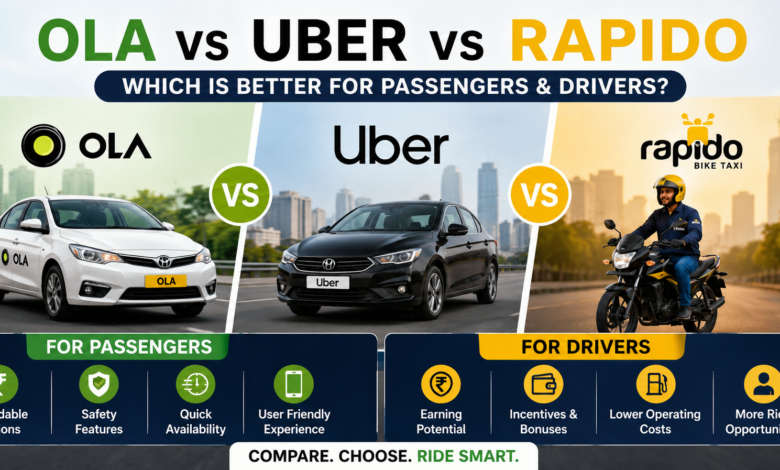
Booking a cab in India today is no longer just about getting from one place to another. For millions of passengers and lakhs of drivers, ride-hailing platforms like Ola, Uber, and Rapido have become part of daily life. Whether it is office travel, airport pickups, late-night rides, food delivery gigs, or bike taxi commutes, these apps now shape urban transportation across India.
But one question continues to dominate conversations among users and drivers alike: Which platform is actually better?
The answer depends on who is asking. Passengers usually look for affordability, quick availability, safety, and service quality. Drivers, on the other hand, care more about earnings, incentives, commissions, fuel costs, and ride demand.
Here is a detailed comparison of Ola, Uber, and Rapido — how these companies started, how large they have become, the services they offer, and which platform currently appears more beneficial for riders and drivers in India.
Contents
How Ola Became One of India’s Biggest Cab Aggregators
Ola was founded in 2010 by Bhavish Aggarwal and Ankit Bhati. The company started as a cab-booking platform focused on Indian cities and quickly expanded into one of the country’s most recognized mobility brands.
Headquartered in Bengaluru, Ola operates in multiple Indian cities and has expanded into electric mobility through Ola Electric. Over the years, the company has offered services including mini cabs, sedans, auto-rickshaws, bike taxis in some regions, rentals, and outstation rides.
One of Ola’s biggest strengths has been its strong presence in tier-2 and tier-3 cities. Many users in smaller cities still rely heavily on Ola due to local availability and regional market penetration.
However, Ola has also faced criticism from passengers regarding ride cancellations, surge pricing, app glitches, and customer support delays. Drivers, meanwhile, have often raised concerns over changing commission structures and fluctuating incentives.
Uber’s Global Experience and Indian Expansion
Uber was founded in 2009 by Travis Kalanick and Garrett Camp in San Francisco. The company entered India in 2013 and rapidly became a major competitor to Ola.
Uber brought a more globalized app experience to Indian users, focusing on app stability, route optimization, digital payments, and user interface design. In India, Uber currently offers services such as Uber Go, Uber Auto, Uber Moto, Uber Premier, intercity rides, and package delivery services.
Passengers often prefer Uber for its relatively smoother app experience and predictable ride tracking. Many users also say Uber drivers cancel rides less frequently compared to some competitors, although this varies by city and time of day.
For drivers, Uber is generally viewed as having a more stable ride demand in metro cities like Mumbai, Delhi, Bengaluru, and Hyderabad. However, many drivers also argue that commissions and incentive reductions over the years have impacted take-home earnings.
Rapido’s Rapid Rise in the Bike Taxi Market
Rapido was founded in 2015 by Aravind Sanka, Rishikesh SR, and Pavan Guntupalli.
Unlike Ola and Uber, Rapido initially focused heavily on bike taxis, targeting short-distance commuters looking for faster and cheaper transportation options in traffic-heavy Indian cities.
Over time, Rapido expanded into auto-rickshaw and cab services as well. The platform gained popularity particularly among college students, office commuters, and users looking for low-cost travel alternatives.
Rapido’s growth has been driven largely by affordability and availability. In many cities, passengers find Rapido rides significantly cheaper than traditional cab bookings during peak hours.
For drivers and bike riders, Rapido also created flexible earning opportunities with lower entry barriers compared to car-based taxi platforms.
Which Platform Is Better for Passengers?
For passengers, the “best” app often depends on three factors: pricing, ride availability, and overall experience.
Pricing Comparison
Rapido is usually considered the most affordable option, especially for short-distance travel. Bike taxis often cost much less than cab rides, making them popular for daily office commutes and college travel.
Ola and Uber pricing can vary significantly depending on demand, traffic, weather, and local availability. During peak hours or rainfall, surge pricing can increase fares sharply on both platforms.
Many passengers say Uber fares are sometimes slightly higher, but the app experience and ride reliability often feel more consistent. Ola, meanwhile, occasionally offers aggressive discounts and wallet offers that make rides cheaper.
Ride Availability
In major metro cities, Uber and Ola generally offer wider cab availability. However, in several smaller cities, Ola maintains a stronger network presence.
Rapido performs strongly in bike taxi categories and short-distance urban travel, particularly in traffic-congested areas where bikes can move faster than cars.
Safety and User Experience
Uber is often praised for cleaner app navigation, better ride tracking, and international-standard safety integrations. Features like live trip sharing, emergency assistance, and route tracking have strengthened user trust.
Ola also offers safety features but has faced periodic complaints related to ride mismatches, cancellations, and customer support responsiveness.
Rapido’s safety perception largely depends on the city and type of service booked. Bike taxis are convenient but may not always feel suitable for families, elderly passengers, or long-distance travel.
Best Choice for Passengers
- Best for affordable daily travel: Rapido
- Best for premium app experience and reliability: Uber
- Best for wider regional availability in India: Ola
Which Platform Is Better for Drivers?
For drivers, the comparison becomes more complicated because earnings depend heavily on city demand, ride hours, fuel prices, vehicle type, and platform incentives.
Driver Earnings on Ola
Ola drivers often benefit from high ride demand in several Indian cities. However, many drivers say earnings fluctuate due to changing incentive models and commission cuts.
Some drivers prefer Ola because of local ride volume, especially in non-metro regions. But complaints regarding customer support and payout structures are not uncommon.
Driver Earnings on Uber
Uber drivers generally report more consistent ride flow in metro cities. The app’s route optimization and passenger demand can help drivers complete more trips in less time.
However, fuel expenses, commissions, and reduced bonuses have affected profitability for many full-time drivers. Several drivers now operate on both Ola and Uber simultaneously to maximize bookings.
Driver Earnings on Rapido
Rapido has become attractive for two-wheeler owners due to lower operating costs. Bike taxi riders often spend less on fuel and maintenance compared to cab drivers.
Rapido also appeals to part-time earners, students, and gig workers looking for flexible income opportunities without investing in expensive vehicles.
Still, earnings per ride are generally lower compared to cab bookings. Drivers often need higher trip volume to earn comparable daily income.
Best Choice for Drivers
- Best for bike owners and low investment earning: Rapido
- Best for consistent metro city ride demand: Uber
- Best for broader regional operations: Ola
Why the Competition Matters
The battle between Ola, Uber, and Rapido is changing India’s transportation ecosystem rapidly. The competition has pushed companies to improve pricing models, launch subscription services, integrate electric vehicles, and expand into delivery and logistics.
State governments have also started paying closer attention to bike taxi regulations, surge pricing complaints, and driver welfare policies. In some states, bike taxi operations have even faced temporary restrictions or legal challenges.
At the same time, rising fuel prices and changing gig economy policies continue to affect driver earnings across platforms.
| Feature / Factor | Ola | Uber | Rapido | Best For |
|---|---|---|---|---|
| Founded | 2010 | 2009 | 2015 | — |
| Founders | Bhavish Aggarwal, Ankit Bhati | Travis Kalanick, Garrett Camp | Aravind Sanka, Rishikesh SR, Pavan Guntupalli | — |
| Headquarters | Bengaluru | San Francisco | Bengaluru | — |
| Main Services | Cabs, Auto, Rentals, Outstation, EV Services | Cabs, Auto, Moto, Intercity, Delivery | Bike Taxi, Auto, Cabs | Depends on usage |
| Ride Pricing | Moderate, varies with surge | Slightly premium in many cities | Usually cheapest | Rapido |
| Bike Taxi Option | Limited in some cities | Uber Moto available in select cities | Strongest bike taxi network | Rapido |
| Cab Availability | Strong in Tier-2 & Tier-3 cities | Strong in Metro cities | Growing cab network | Ola / Uber |
| App Experience | Good but mixed reviews | Smooth and stable UI | Simple and lightweight | Uber |
| Ride Tracking | Available | Advanced tracking features | Basic but effective | Uber |
| Safety Features | SOS, ride sharing | SOS, live tracking, emergency tools | Safety tools available | Uber |
| Ride Cancellation Complaints | Comparatively higher complaints | Lower in many cities | Moderate | Uber |
| Outstation Rides | Widely available | Available in major cities | Limited compared to others | Ola |
| Corporate/Business Travel | Available | Strong corporate use | Limited | Uber |
| Auto Booking | Popular in many cities | Growing rapidly | Strong presence | Tie |
| Waiting Time | Depends on city | Generally faster in metros | Fast for short trips | Uber / Rapido |
| Affordable Daily Commute | Good offers and discounts | Reliable but slightly expensive | Very affordable | Rapido |
| Peak Hour Pricing | Surge pricing common | Surge pricing common | Usually lower than cabs | Rapido |
| Driver Commission | Variable | Variable | Lower entry barrier | Rapido |
| Driver Earnings Potential | Good in regional markets | Better in metros | Good for bike owners | Depends on vehicle |
| Fuel Cost for Drivers | Higher for cab drivers | Higher for cab drivers | Lower for bike riders | Rapido |
| Incentive Programs | Available but fluctuating | Stable but reduced over time | Flexible earning model | Depends on city |
| Best for Part-Time Drivers | Moderate | Moderate | Very suitable | Rapido |
| Best for Full-Time Cab Drivers | Good regional demand | Strong metro demand | Limited compared to cab apps | Uber |
| Electric Vehicle Push | Strong EV expansion | Expanding EV partnerships | Limited EV focus currently | Ola |
| Customer Support | Mixed feedback | Generally better-rated | Improving support | Uber |
| Regional Presence | Very strong across India | Strong in major cities | Rapidly expanding | Ola |
| Traffic Navigation | Standard | Better optimization | Efficient for short routes | Uber / Rapido |
| Student-Friendly Option | Moderate | Moderate | Highly popular among students | Rapido |
| Airport Travel | Widely used | Highly reliable | Limited for long-distance | Uber / Ola |
| Best Overall for Passengers | Affordable + local reach | Reliability + app quality | Budget-friendly travel | Depends on need |
| Best Overall for Drivers | Strong in smaller cities | Strong in metros | Best low-cost entry earning | Depends on city & vehicle |
The Bigger Picture
For passengers, there is no single winner across every category. Someone traveling daily through traffic may prefer Rapido. A family heading to the airport may choose Uber. In smaller cities, Ola may still dominate availability.
For drivers, earnings increasingly depend less on platform loyalty and more on strategy — choosing the right hours, locations, and ride combinations.
As India’s mobility market expands further, competition between Ola, Uber, and Rapido is likely to intensify. New electric vehicle partnerships, subscription models, and AI-based route optimization may reshape how passengers travel and how drivers earn in the years ahead.
Also read | Andaman Underwater National Flag Guinness Record: India Creates History At Radhanagar Beach
Frequently Asked Questions (FAQs)
1. Which is cheaper: Ola, Uber, or Rapido?
Rapido is usually the cheapest for short-distance travel, especially bike taxis.
2. Which app has better customer support?
Many users consider Uber’s support system relatively more responsive, though experiences vary.
3. Which platform helps drivers earn more?
Cab drivers often prefer Uber in metro cities, while bike riders may find Rapido more profitable due to lower expenses.
4. Is Rapido available for car rides?
Yes, Rapido has expanded beyond bike taxis into autos and cab services in several cities.
5. Why do drivers cancel rides frequently?
Drivers may cancel due to low fares, long pickup distances, payment mode issues, or traffic conditions.
6. Which app is safest for passengers?
All three offer safety tools, but Uber is often viewed as having a more refined safety ecosystem.
7. Can drivers work for multiple apps?
Yes, many drivers simultaneously use Ola, Uber, and Rapido to increase ride opportunities.
8. Which app is best for outstation travel?
Ola and Uber both offer outstation ride services in many cities.
9. Why does surge pricing happen?
Prices increase automatically when demand becomes higher than available drivers.
10. Are bike taxis legal across India?
Bike taxi rules differ from state to state, and regulations continue to evolve.