Maharashtra to Withdraw Cases Against Student Protesters, Fadnavis Directs Home Department

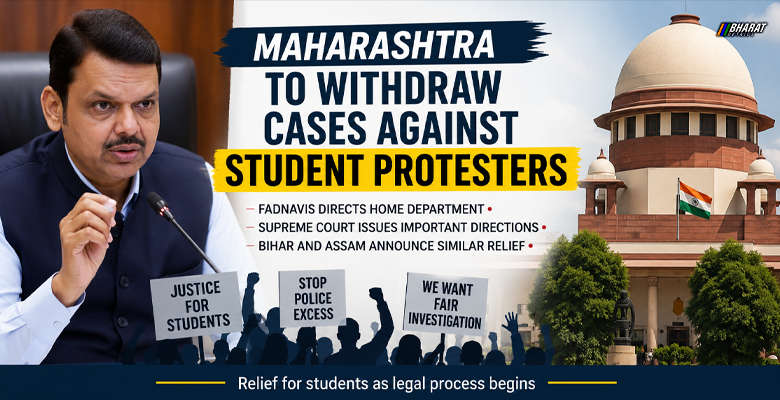
Maharashtra student protest cases are set to be withdrawn after Chief Minister Devendra Fadnavis directed the state Home Department to begin the process against youths booked during recent demonstrations.
The decision was announced on Tuesday, July 28, amid growing legal and political developments surrounding protests linked to demands over the NEET examination controversy. The Maharashtra government clarified that the withdrawal will be carried out after obtaining the necessary permission from the respective courts.
The move places Maharashtra alongside Bihar and Assam, where governments have also announced steps to provide relief to people booked or detained in connection with the recent protests.
The protests had included demands for accountability over alleged examination irregularities and, according to the material provided, a demand for the resignation of former Union Education Minister Dharmendra Pradhan.
Contents
Fadnavis directs Home Department to begin withdrawal process
Fadnavis directed the Maharashtra Home Department to issue the required orders for withdrawing cases registered against youths who participated in the protests.
However, the announcement does not mean that every case disappears automatically. Where court permission is legally required, the relevant procedure will have to be followed before cases can be formally withdrawn.
The distinction is important because an executive decision to seek withdrawal and the actual closure of criminal proceedings are separate legal steps.
For students and young protesters facing criminal proceedings linked to the demonstrations, the move could provide significant relief once the prescribed process is completed.
Supreme Court issues directions on student protesters
The Maharashtra decision came on the same day as important proceedings before the Supreme Court concerning the treatment of students detained or arrested during the recent protests.
A bench headed by Chief Justice of India Surya Kant, along with Justices Joymalya Bagchi and V. Mohana, directed the release of student protesters who are below 18 years of age and those who have no criminal antecedents, subject to the conditions set out by the court.
The court also restrained authorities from taking coercive action against eligible protesters while the proceedings remain pending. The protection, however, does not extend to people with criminal antecedents.
The Supreme Court further directed states where demonstrations took place to preserve material that could help establish what happened during the protests.
This includes CCTV footage, drone recordings, body-camera footage, wireless communication records, PCR logs and other electronic evidence. The court also directed that digital information collected about protesters should be preserved and not made public.
Court flags need for a fair investigation
The proceedings before the Supreme Court followed petitions alleging excessive use of force during the demonstrations.
The court observed that the allegations prima facie warranted consideration of a fair and independent investigation. The matter also involves allegations concerning injuries to both students and police personnel, making preservation of evidence particularly significant.
The Supreme Court has sought responses from the chief secretaries of Delhi, Maharashtra, Bihar, Kerala, Madhya Pradesh and Uttar Pradesh in connection with the issues raised before it.
The court has allowed investigations into FIRs already registered in Delhi to continue, while directing that eligible protesting students should not face coercive action during the pendency of the proceedings.
Bihar and Assam had already announced relief
Maharashtra’s announcement follows similar steps in Bihar and Assam.
The Bihar government said it would withdraw FIRs, criminal complaints and show-cause notices connected with protests held before 6 pm on July 26. It also announced that people arrested or detained in such cases would be released, while stating that no punitive or retaliatory legal action would be taken against those who participated in the protests within the specified period.
Assam also announced relief after five cases connected with the protests had reportedly been registered in the state, involving 13 arrests. The state government said it would initiate the process of withdrawing the cases and take steps towards the release of those arrested under the relevant legal process.
What happens next in Maharashtra?
The immediate next step is the formal process within the Maharashtra Home Department and the courts concerned.
The government’s direction provides the administrative basis for seeking withdrawal, but the status of individual cases will depend on the applicable legal procedure and the orders passed by the respective courts.
The Supreme Court proceedings could also have wider implications for how authorities handle student demonstrations, particularly regarding detention, police action and preservation of evidence.
For students who were booked during the protests, the developments represent a potentially important legal reprieve. The final outcome, however, will depend on implementation of the government’s decision and the court process in individual cases.