Sonam Wangchuk Ends 26-Day Hunger Strike After Government Assurances; Student Protest Movement Continues Across India

Sonam Wangchuk Hunger Strike Ends After 26 Days, But Student Protest Movement Shows No Sign of Slowing
After nearly four weeks without food, Sonam Wangchuk Hunger Strike came to an end on Friday following discussions between the social reformer and senior members of the Central Government. While Wangchuk has resumed eating after receiving assurances that concerns surrounding examination paper leaks and accountability will be discussed in Parliament, the larger student-led movement demanding education reforms has made it clear that its campaign will continue.
The development marks an important moment in one of India’s most closely watched public movements this year. Although the hunger strike has concluded, organisers insist their demands extend beyond a single protest and focus on long-term reforms aimed at restoring confidence in India’s competitive examination system.
Contents
Fast Ends After High-Level Discussions
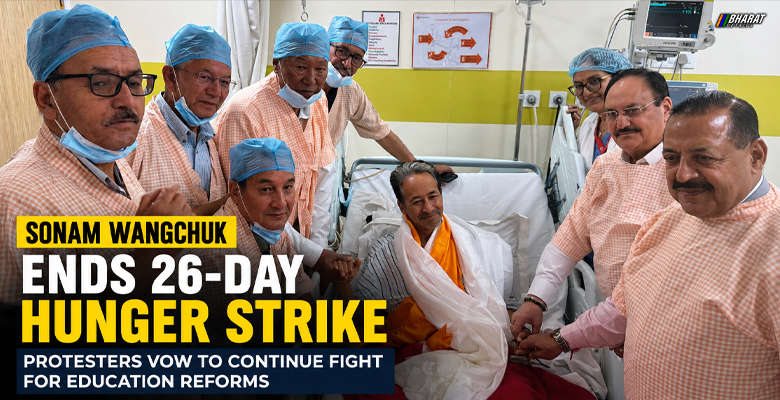
Sonam Wangchuk formally ended his 26-day indefinite fast at a hospital in Gurugram in the presence of Union Ministers J.P. Nadda and Dr. Jitendra Singh. The activist had earlier been admitted under medical supervision after doctors expressed concern over his deteriorating health following weeks without food.
Officials familiar with the discussions said the meeting followed extensive negotiations involving senior government representatives. Wangchuk reportedly received assurances that the issue of examination paper leaks and institutional accountability would receive broader political discussion during the ongoing Parliament session.
Images released after the meeting showed Wangchuk accepting his first drink to break the fast while family members and supporters remained present inside the hospital room.
Speaking briefly after ending the fast, Wangchuk thanked everyone who had appealed for his recovery and acknowledged the support of his wife, who remained beside him throughout his medical treatment and legal proceedings.
Health Became a Serious Concern
Doctors monitoring Wangchuk’s condition had repeatedly warned that prolonged fasting could result in severe medical complications. During the course of the protest, he reportedly lost a significant amount of weight and required continuous observation.
His health became the subject of public concern after he was shifted from the protest site in Delhi to a government hospital. Later, following legal intervention initiated by his family, he was transferred to a private medical facility where specialists continued monitoring his recovery.
Medical experts had advised that ending the hunger strike was necessary to avoid further health risks. Although his condition remains stable, doctors are expected to closely supervise his gradual nutritional recovery over the coming days.
Why Wangchuk Chose to End the Fast
While announcing his decision, Wangchuk explained that several factors influenced his move.
Apart from the government’s assurances, he indicated that growing concerns over possible violence during ongoing demonstrations weighed heavily on his mind. Throughout the protest, he repeatedly maintained that peaceful democratic participation should remain at the heart of the movement.
In a public message shared after ending the fast, Wangchuk urged supporters not to allow emotions to turn into confrontation. He appealed for restraint and asked protesters across the country to maintain discipline regardless of developments on the ground.
According to people associated with the negotiations, dozens of Members of Parliament from different political parties had also urged Wangchuk to prioritise his health and end the fast.
How the Protest Began
The hunger strike began after Wangchuk joined students protesting alleged irregularities in several competitive examinations, including the controversy surrounding the NEET examination.
The student movement argues that repeated allegations of examination paper leaks have damaged public confidence in India’s recruitment and admission systems. Protesters say millions of students invest years preparing for highly competitive examinations, making transparency and fairness essential.
As the demonstrations expanded, the campaign attracted support from teachers, education experts, professionals, parents and civil society organisations across different states.
What initially started as protests focused primarily on examination irregularities gradually evolved into a broader conversation about accountability within the country’s education system.
Growing Public Attention
Over the past several weeks, demonstrations have drawn considerable national attention.
Large gatherings have taken place in New Delhi and other cities, with students demanding stronger safeguards against paper leaks, quicker investigations and stricter punishment for those responsible.
Several protest marches witnessed heavy security deployment, while some demonstrations resulted in confrontations between protesters and police. Images from these events circulated widely on social media, further increasing public discussion surrounding examination reforms.
Supporters argue that the movement reflects frustration among young people who believe recurring examination controversies undermine years of academic preparation and career planning.
Government Announces Fresh Measures
Even before Wangchuk officially ended his fast, the Central Government announced a series of measures aimed at strengthening the integrity of competitive examinations.
Among the proposals is draft legislation that seeks tougher punishment for individuals involved in examination paper leaks and faster judicial processes through dedicated fast-track courts.
Government representatives stated that the proposed law is intended to improve accountability while ensuring that those responsible for organised examination fraud face stronger legal consequences.
The proposed legislation is expected to be introduced during the ongoing Monsoon Session of Parliament after receiving Cabinet approval.
Alongside the legislative proposals, the government also announced administrative changes within the Ministry of Education, appointing new senior officials responsible for higher education and school education administration.
Officials indicated that the restructuring is intended to improve policy implementation as the ministry addresses growing concerns surrounding examination management and institutional governance.
Prime Minister Responds
Prime Minister Narendra Modi also responded publicly after Wangchuk concluded his fast.
In a message shared on social media, the Prime Minister wished Wangchuk a speedy recovery and encouraged him to follow medical advice during the recovery process.
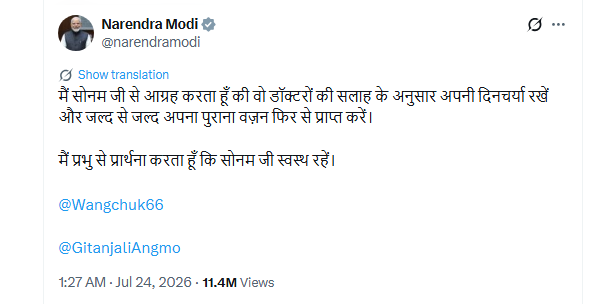
He expressed hope that Wangchuk would regain his health soon while reiterating the government’s commitment to addressing concerns related to examination integrity through institutional reforms.
The Prime Minister had earlier announced that the government intended to strengthen legal provisions against examination fraud and accelerate judicial proceedings in such cases.
Protest Organisers Say Movement Will Continue
Although Wangchuk has ended his fast, organisers behind the nationwide protests have clarified that their movement is far from over.
Leaders associated with the campaign say demonstrations will continue until broader reforms are implemented and their key demands receive a concrete response.
The movement has consistently called for comprehensive changes aimed at preventing examination leaks, improving transparency, fixing accountability mechanisms and restoring public confidence in India’s competitive examination system.
Several organisers have also maintained their demand for political accountability, arguing that systemic reforms must be accompanied by administrative responsibility.
Nationwide Protests Continue Despite Wangchuk Ending His Fast
While Sonam Wangchuk’s decision to end his hunger strike has brought relief to his supporters, protest organisers say the movement has entered a new phase rather than reaching its conclusion.
Student groups and civil society organisations leading the demonstrations have reiterated that their demands remain unchanged. They continue to seek comprehensive reforms in India’s examination system, stronger safeguards against paper leaks, transparent investigations into alleged irregularities, and accountability at every level.
Organisers have also announced that peaceful demonstrations will continue across several cities until they receive what they describe as a satisfactory response from the government.
Movement Expanded Beyond NEET
What began as outrage over alleged irregularities in the NEET examination has gradually transformed into a broader youth-led movement questioning the integrity of competitive examinations across India.
For many students, the issue is no longer limited to a single examination. Instead, it reflects growing anxiety over repeated reports of recruitment and entrance examination leaks affecting lakhs of candidates preparing for government jobs and higher education admissions.
Education experts believe restoring confidence in the examination process requires not only stronger laws but also improvements in digital security, institutional oversight and faster investigations whenever irregularities are reported.
Calls for Accountability Continue
Several protest leaders have welcomed the government’s decision to propose tougher legal action against those involved in paper leaks but maintain that legislative reforms alone may not be enough.
According to organisers, long-term structural reforms and greater administrative accountability remain central to their campaign.
The movement has also continued demanding political responsibility, including the resignation of Union Education Minister Dharmendra Pradhan, arguing that public confidence can only be rebuilt through both institutional reforms and visible accountability.
Government representatives, however, have focused on strengthening the legal framework while assuring that concerns raised by students will be addressed through policy measures and parliamentary discussion.
Government’s Proposed Reform Agenda
The Centre has already indicated that it intends to introduce legislation aimed at making examination fraud a far more serious criminal offence.
Among the measures being considered are:
- Fast-track courts for paper leak cases.
- Stricter punishment for organised examination fraud.
- Faster investigation and prosecution.
- Stronger safeguards to protect future examinations.
- Administrative reforms within the education system.
Officials say these measures are designed to ensure that deserving students are not disadvantaged by criminal networks involved in examination malpractice.
The government has also maintained that conducting re-examinations where necessary helped prevent students from losing an academic year, while acknowledging that additional reforms are required.
A Peaceful Appeal That Defined the Protest
Even before concluding his fast, Wangchuk repeatedly appealed for calm.
He urged supporters not to allow anger or frustration to lead to violence despite growing emotions surrounding the movement. His repeated emphasis on peaceful democratic protest remained consistent throughout the agitation.
Supporters say that message helped keep attention focused on education reforms rather than political confrontation.
The activist has also indicated that he will soon release a detailed explanation of the discussions held with government representatives and the assurances that ultimately convinced him to end his fast.
What Happens Next?
The coming weeks could prove crucial for both the government and the protest movement.
Parliament is expected to debate legislative measures aimed at tackling examination paper leaks, while discussions between government representatives and protest organisers are likely to continue.
Students across the country will also be closely watching whether the promised reforms translate into concrete policy changes that strengthen transparency and restore confidence in competitive examinations.
Although Wangchuk’s fast has officially ended, the larger conversation surrounding fairness, accountability and trust in India’s education system appears far from over.
For now, his recovery marks the end of one chapter, while the nationwide demand for examination reforms continues to shape public debate.