Bangladesh Crosses a Red Line: Hindu Man Lynched and Burned Alive as Mob Violence Spirals Out of Control

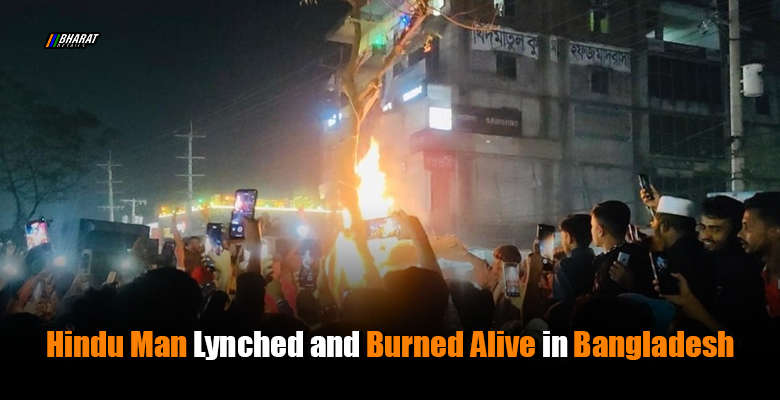
Bangladesh witnessed a horrifying collapse of humanity on Thursday night when a Hindu garment worker was brutally lynched and burned alive by a mob in Mymensingh district over unproven allegations of blasphemy. The killing has sparked widespread outrage and renewed fears about the safety of minorities as mob violence tightens its grip on a country already reeling from political unrest.
The victim, Dipu Chandra Das, a young factory worker living as a tenant in the Dubalia Para area of Bhaluka upazila, was accused by locals of making remarks they claimed were offensive to Islam. There was no police complaint, no inquiry, and no attempt to verify facts. Instead, an angry crowd took the law into its own hands, beating him mercilessly, tying his body to a tree, and setting it on fire in a public display of unchecked brutality.
What happened to Dipu Chandra Das was not a spontaneous act of anger—it was a chilling reminder of what occurs when mob rule replaces the rule of law. Police sources confirmed that by the time authorities reached the spot, the violence had already ended, leaving behind a charred body and serious questions about the state’s ability to protect its citizens.
The killing took place amid nationwide unrest following the death of student leader Sharif Osman Hadi, whose fatal shooting earlier this month triggered violent protests across Bangladesh. Streets in multiple cities have since descended into chaos, with media offices vandalised, homes attacked, and diplomatic premises targeted. In this volatile atmosphere, minorities have once again found themselves dangerously exposed.
In Chattogram, protesters gathered outside the Indian Assistant High Commission, shouting slogans and hurling stones, forcing security agencies to intervene. While no major damage was reported, the message was unmistakable: rage has been allowed to override restraint.
Bangladesh’s interim government, led by Chief Adviser Muhammad Yunus, condemned the lynching in strong terms, stating that such acts have “no place in the new Bangladesh.” Authorities later confirmed that the Rapid Action Battalion arrested seven suspects linked to Dipu Chandra Das’s killing. Officials said investigations are ongoing and promised that those responsible would face the full force of the law.
Human rights organisations have been unequivocal in their response. Amnesty International condemned the lynching as a grave human rights violation and warned that impunity for mob violence only emboldens further attacks. The organisation called for swift, independent investigations and accountability without exception.
Political reactions have poured in from India as well, with leaders expressing alarm over what they described as a dangerous pattern of violence against minorities. Comparisons have been drawn to other instances of mob killings in the region, underscoring the wider consequences of normalising vigilantism.
This was not merely a crime—it was a moral failure. No allegation, belief, or grievance can ever justify the public lynching and burning of a human being. If such acts are allowed to pass without decisive accountability, they risk becoming precedents rather than aberrations.
As Bangladesh stands at a critical political crossroads, the message from this killing is stark: restoring law, protecting minorities, and dismantling the culture of mob justice are no longer optional—they are urgent imperatives.
For ongoing developments and verified updates, readers can follow the Bharat Details WhatsApp Channel