Mumbai Police Ask Actor Imran Khan to Leave India by October 28 Over Anti-CEC Protest

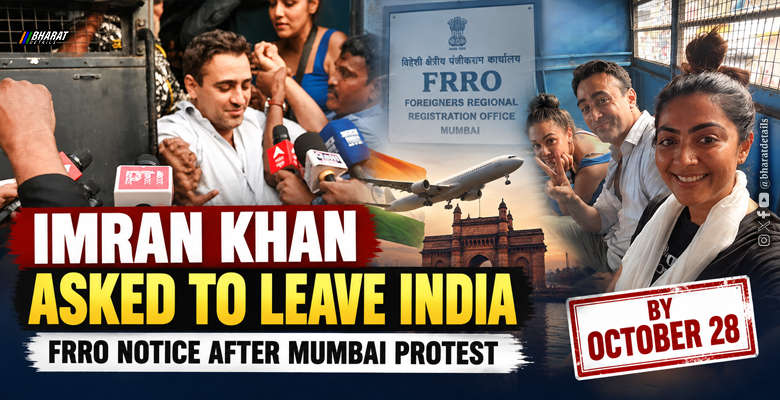
Actor Imran Khan has been asked to leave India by October 28 after participating in a protest at Mumbai’s August Kranti Maidan demanding the resignation of Chief Election Commissioner Gyanesh Kumar. The notice, reportedly issued by the Foreigners Regional Registration Office (FRRO), follows questions raised over the actor’s participation in a political demonstration despite being a US citizen and an Overseas Citizen of India (OCI) cardholder.
The development has brought immigration regulations governing OCI cardholders into focus, particularly the restrictions that apply to their involvement in political activities in India.
Khan, the nephew of Bollywood actor Aamir Khan, was among the demonstrators detained by Mumbai Police during the October 10 protest. The gathering was linked to a wider campaign against the Special Intensive Revision (SIR) of electoral rolls, an exercise that has become a subject of political controversy.
Contents
Why was Imran Khan asked to leave India?
According to officials, action was initiated against the actor under the applicable immigration provisions after his participation in the protest came under scrutiny. Khan is an American citizen who holds an OCI card, which allows eligible foreign citizens of Indian origin certain residency and travel privileges but does not grant Indian citizenship.
The matter came to the attention of the authorities after former BJP MP Kirit Somaiya approached Mumbai Police, questioning whether the actor was legally permitted to participate in the demonstration.
Somaiya wrote to Mumbai’s Joint Commissioner of Police, Manoj Kumar Sharma, seeking an inquiry into Khan’s involvement. He argued that the actor’s foreign citizenship raised questions about his participation in a political agitation and asked whether the necessary permissions had been obtained.
The BJP leader subsequently demanded action against Khan, including his deportation. The complaint was referred to the immigration authorities, following which the FRRO reportedly issued the notice directing the actor to leave India by October 28.
The notice marks a significant development in the case, although the precise legal grounds and any further proceedings would need to be assessed against the applicable immigration rules and the contents of the official order.
What happened at the August Kranti Maidan protest?
The demonstration took place on October 10 at August Kranti Maidan in Mumbai. Participants were seeking the resignation of Chief Election Commissioner Gyanesh Kumar over concerns surrounding the SIR exercise and the revision of electoral rolls.
The gathering was called by Tushar Gandhi, the great-grandson of Mahatma Gandhi, in solidarity with the Cockroach Janata Party (CJP) protest in Delhi.
Mumbai Police had deployed security personnel around the venue. Officials said permission had not been granted for the proposed gathering and cited Bombay High Court directions restricting protests to Azad Maidan.
CJP supporters, however, maintained that they had emailed the police seeking permission but had not received a response.
Police detained several demonstrators during the incident, including Imran Khan. The actor’s detention attracted attention after he shared a selfie from inside a police van on social media, captioning it, “Apparently I’m going for a drive.”
Videos from the protest also showed him questioning the police about his treatment and explaining why he had attended the gathering.
What did Imran Khan say about his participation?
Khan maintained that he had attended the protest in his individual capacity and was not representing any political party or organisation.
Speaking to reporters, he said he had no specific demands and wanted to understand why people’s freedom of movement was being restricted and why their voices were being suppressed.
The actor emphasised that his presence was personal rather than organisational. He also questioned the circumstances surrounding his detention, asking the police what he had done and why he was being manhandled.
His comments placed the focus on his stated reasons for attending the demonstration rather than on any formal political role.
However, his explanation does not by itself settle the separate question of whether his participation complied with the conditions applicable to his immigration status.
What are the rules for OCI cardholders participating in political activities?
An Overseas Citizen of India card is often misunderstood as a form of dual citizenship. In reality, OCI status does not make its holder an Indian citizen and does not provide the same political rights available to Indian citizens.
OCI cardholders enjoy several privileges related to travel and residence in India, subject to the applicable laws and conditions. They are not entitled to certain political rights, including voting in Indian elections or contesting elections.
Their participation in political activities may also be subject to specific restrictions under the rules and conditions governing their status. The precise application of those restrictions depends on the nature of the activity and the relevant legal provisions.
In Khan’s case, the authorities’ notice raises questions about the rules they have relied upon and how those provisions apply to his participation in the demonstration. The notice itself, along with any subsequent response or legal challenge, will be important in understanding the basis for the action.
Also read | Meerut Blue Drum Murder Case: Muskan Rastogi And Sahil Shukla Sentenced To Death
Why has the incident attracted political attention?
The episode has developed against the backdrop of an ongoing political dispute over the revision of electoral rolls and demands for Kumar’s resignation.
The Special Intensive Revision exercise has drawn criticism from groups concerned about the process and its potential impact on voters. Supporters of the exercise and its critics have taken opposing positions, making the issue a source of political debate.
Khan’s presence at the Mumbai protest added an immigration dimension to the controversy. While his stated reason for attending was to raise concerns about restrictions on movement and expression, Somaiya’s complaint shifted attention towards the legal conditions applicable to foreign citizens holding OCI status.
The case therefore involves two distinct questions: the circumstances surrounding the protest and the legal basis for the immigration action against the actor.
What happens next?
The October 28 deadline is the immediate point of focus following the reported FRRO notice. The next developments may depend on Khan’s response, any clarification issued by the immigration authorities and whether the actor chooses to challenge the decision through the appropriate legal channels.
The case could also draw further attention to the distinction between OCI privileges and the rights available to Indian citizens, particularly in politically sensitive situations.
For now, the notice has placed Khan’s immigration status at the centre of a wider debate involving political protest, electoral-roll revision and the limits governing the participation of foreign nationals in public demonstrations in India.